How to Build a Professional Portfolio as a Nigerian University Student Before Graduation
Most Nigerian undergraduates reach final year with a strong transcript, a stack of course notes, and a SIWES logbook, but very little they can actually show to an employer, a postgraduate admissions panel, or a client. Then the job hunt begins, and a one-page CV has to carry four or five years of work. It rarely can.
A professional portfolio solves that problem. It is an organised, evidence-based collection of your best work, skills, and achievements, built over time, so that anyone who wants to judge your ability can see it for themselves. You do not need to be a designer or a software developer to have one. Accountants, nurses, lawyers, engineers, teachers, agricultural scientists, and mass communication students can all build portfolios that make them stand out.
This guide explains exactly how to build a professional portfolio as a Nigerian university student before graduation: what to include, how to start from zero, which tools are free, how to use SIWES and NYSC, and the mistakes that quietly weaken many student portfolios.
Quick Answer: How Do You Build a Professional Portfolio as a Student?
Here is the short version before we go deeper:
- Choose a direction. Decide the field or role you are aiming for, even if it is only a first guess.
- Audit what you already have. Course projects, final-year project drafts, SIWES work, class presentations, volunteering, and leadership roles all count.
- Create proof of skill. Complete two to four meaningful projects, placements, or case studies that match your direction.
- Document each one properly. For every item, explain the problem, your role, what you did, the result, and what you learned.
- Pick a home for the portfolio. This could be a simple website, a PDF, a Google Drive folder, a LinkedIn profile, or a platform specific to your field.
- Back it up with credentials and references. Certificates, referee contacts, and verified recommendations strengthen the evidence.
- Keep updating it until graduation and beyond. A portfolio is a living record, not a one-time assignment.
No portfolio guarantees a job, admission, or scholarship. What it does is give decision-makers something concrete to assess, which is far better than relying on a CV alone.
What a Professional Portfolio Actually Is (and What It Is Not)
A portfolio is proof of ability. A CV claims that you can do something; a portfolio demonstrates it.
For a graphic designer, that means designs. For a software developer, it means working code and live projects. For a law student, it might mean moot court records, a well-written legal memo (with any real client details removed), and a published case comment. For a nursing student, it could be a compilation of community health outreach reports, a reflective practice journal, and verified clinical rotation records. Different fields, same principle.
Portfolio vs CV vs LinkedIn Profile vs Personal Website
Students often confuse these. They work together, but they do different jobs.
| Item | Main purpose | Typical length or format | Best for |
|---|---|---|---|
| CV (Curriculum Vitae) | Summarises your education, experience, skills, and referees | One to two pages for graduates | Job applications, internships, postgraduate applications |
| Portfolio | Shows evidence of your work and thinking | Several samples or case studies, each with context | Interviews, client pitches, scholarship panels, competitive applications |
| LinkedIn profile | Public professional identity and networking | Online profile with sections for experience, projects, skills | Recruiters, networking, building credibility |
| Personal website | A central, controlled home for your portfolio | A few pages: home, projects, about, contact | Fields where visual or technical proof matters |
Your CV should point to your portfolio. Your LinkedIn profile should link to it. Your personal website, if you build one, should host it. Think of the portfolio as the engine and the others as ways of reaching people.
Common Misconceptions
- “Portfolios are only for creative or tech students.” Not true. Any field where you produce work that can be examined (reports, analyses, designs, lesson plans, lab results, research proposals, case notes) can have a portfolio.
- “I must wait until I have a lot of experience.” You do not. Good early portfolios are built from academic projects, volunteer work, and self-initiated mini-projects.
- “A portfolio is a folder of certificates.” Certificates support a portfolio; they are not the portfolio. Evidence of actual work matters more.
- “I need an expensive website.” You can build a credible portfolio with free tools and a smartphone or modest laptop. Presentation matters, but money is not the main ingredient.
Why a Portfolio Matters for Nigerian University Students
Nigeria has a large pool of graduates competing for a limited number of structured entry-level roles, internships, and fellowships. Many employers receive far more applications than they can read carefully, so they rely on quick filters: school, grades, and CV. A portfolio gives you another way to be assessed, one based on what you can do rather than only what you have studied.
There are several practical reasons to build one while you are still a student.
1. It makes your degree more visible
Two students may graduate with the same class of degree from the same department. One can only say, “I studied Civil Engineering.” The other can show a structural analysis project, a site visit report from SIWES, and a short write-up on how they solved a drainage problem on campus. The second student is easier to remember and easier to trust.
2. It helps you apply for opportunities beyond conventional jobs
Portfolios are useful for internships, graduate trainee programmes, scholarships, postgraduate applications (including abroad), freelance work, fellowships, competitions, and entrepreneurship funding. Some of these ask for samples or project descriptions directly. Others simply favour applicants who can back up their claims.
3. It forces you to discover your direction early
As you collect and organise your work, patterns emerge. You may notice you enjoy data analysis more than accounting practice, or community health more than clinical work, or teaching more than research. That clarity helps you choose electives, SIWES placements, and further training with purpose.
4. It gives you confidence for interviews
It is easier to answer “Tell me about a time you solved a problem” when you already have written case studies of exactly that. Your portfolio doubles as interview preparation.
5. It supports remote and cross-border opportunities
Many remote employers and clients can only evaluate you through what you share online. A portfolio, together with a clear LinkedIn profile, lets you be assessed without needing to meet in person.
A caution: a portfolio improves your chances, but it cannot promise a job, an offer, or a particular income. Hiring decisions depend on many factors, including timing, competition, internal policies, and sometimes plain luck. Build your portfolio to become genuinely better, not to chase guaranteed outcomes.
A Year-by-Year Roadmap for Nigerian Undergraduates
Most Nigerian university degrees run for four to six years, depending on the programme (for example, many arts and sciences programmes run four years, many engineering and agriculture programmes five, and some health programmes six or more). Direct Entry students have a shorter window. The roadmap below uses a general five-level structure; adjust it to your own course length and your institution’s calendar.
| Stage | Main focus | Portfolio actions |
|---|---|---|
| 100 Level | Settle in, build habits | Create a Google Drive or cloud folder system. Start saving class projects, presentations, and assignments you are proud of. Join one club or society. Open an email address you will use professionally. |
| 200 Level | Explore interests | Take short courses in a skill related to your field. Start a small personal project. Take photos or notes of any leadership or volunteer work. Create a basic LinkedIn profile. |
| 300 Level | Build real proof | Complete one or two substantial projects. Use SIWES or industrial training strategically (more below). Begin writing case studies. Draft your first proper CV. |
| 400 Level | Sharpen and showcase | Publish your portfolio. Collect recommendations. Enter competitions or pitch for internships. Use your final-year project as a flagship piece. |
| 500 Level and final stage | Convert to opportunity | Refine the portfolio for specific applications. Prepare for NYSC, postgraduate applications, and graduate roles. Gather referees. Practise presenting your work. |
If you are already in final year and have done none of this, do not panic. A focused portfolio can be assembled in six to twelve weeks if you work deliberately. A later section explains how to compress this plan.
Step 1: Define Your Direction Before You Collect Anything
A portfolio with no direction becomes a dumping ground. Before you decide what to include, decide what the portfolio is for.
Ask yourself four questions
- What kind of opportunity do I want first? Possible answers: a graduate trainee programme, an internship, a postgraduate programme, freelance projects, a professional licensing route, or my own business.
- What roles or work areas fit my course? Search for job titles related to your degree. Read several job descriptions and notice repeating skills, tools, and responsibilities.
- Which of those work areas genuinely interest me? Interest sustains effort. A portfolio you hate building will be abandoned.
- What evidence would a hiring manager in that area want to see? This is the most important question, and it guides everything else.
Use job descriptions as a research tool
Open job platforms, company career pages, and LinkedIn listings. Pick five to ten entry-level or internship roles that appeal to you. Copy the skills and tools they mention into a simple list and note which ones appear most often. For a business administration student interested in marketing, the list might include social media management, content planning, basic analytics, report writing, and campaign planning. That list tells you what to build evidence for.
Treat this as a guide, not as a promise. Job requirements vary by company and change over time, so refresh your research every few months.
Pick a primary lane and a secondary lane
You do not have to choose one path forever. Choose a primary lane (the main thing you want to be known for) and, if you wish, a secondary lane (a supporting skill or alternative path). For example, a Statistics student might choose data analysis as the primary lane and research and academic writing as the secondary lane. Your portfolio then leans mostly on the first and shows enough of the second to prove versatility.
Write a one-sentence positioning statement
This is a simple sentence that tells people who you are professionally. It will appear at the top of your portfolio and LinkedIn profile. Examples (hypothetical):
- “Final-year Microbiology student with hands-on laboratory experience in food safety testing and a growing interest in quality assurance.”
- “Mass Communication student who produces short-form video content and campaign copy for student organisations and small businesses.”
- “Accounting student focused on financial reporting, with project experience in bookkeeping for small enterprises.”
Notice what these have in common: they state a field, a skill, and a direction, and they avoid exaggerated claims such as “the best” or “world-class.”
Step 2: Audit What You Already Have
Most students underestimate their existing material. Before creating anything new, spend a weekend collecting and sorting what you have already done.
Places to look
- Academic work: term papers, group projects, practical reports, lab write-ups, presentations, design drawings, case analyses, seminar papers, field trip reports.
- Final-year or research project work: proposals, literature reviews, data collected, charts, and drafts.
- SIWES or industrial training: logbooks, reports, photographs (where allowed), supervisor comments, tasks you completed.
- Leadership and student organisations: events you organised, budgets you managed, newsletters you edited, teams you led.
- Volunteering and community work: outreach programmes, tutoring, awareness campaigns, NGO support.
- Competitions and hackathons: entries, certificates, results, even if you did not win.
- Part-time work or small ventures: tutoring, selling products, freelance gigs, managing social media for a business, helping at a family enterprise.
- Online learning: certificates, projects completed on learning platforms, practice tasks.
- Publications and writing: articles, blog posts, departmental magazine entries, conference abstracts.
Create a simple inventory
In a spreadsheet or notebook, list each item with these columns: what it is, when you did it, your role, what the outcome was, and where the evidence is stored. This inventory becomes your raw material.
Score each item
Rate each item from one to five on three questions:
- Relevance: Does it support the direction I chose in Step 1?
- Quality: Am I proud of the work? Does it show real skill?
- Evidence: Can I show proof (a file, link, photo, document, or a person who can confirm it)?
Items that score high on all three become portfolio candidates. Items with high relevance but low quality are worth improving. Items with low relevance can remain on your CV but may not belong in the portfolio itself.
Identify your gaps
Compare your inventory with the skills list you built from job descriptions. The gaps are your action plan. If employers keep asking for spreadsheet skills and you have no evidence of that, a small project using real or realistic data is a sensible next move.
Step 3: Create Proof of Skill Through Meaningful Projects and Experiences
The heart of any portfolio is its proof. This is where many students struggle, especially in the first or second year when they feel they have “nothing to show.” The truth is that you can generate proof deliberately, and you can do it with limited resources.
Principle: depth beats volume
Three well-documented projects are more persuasive than fifteen shallow ones. Reviewers rarely have time to read everything, so a focused portfolio with strong examples respects their time.
As a guide, aim for:
- Two to four flagship projects (your best, most relevant work)
- A few smaller supporting items (short pieces, certificates, quick demonstrations)
- Clear evidence of teamwork or leadership (at least one example)
Types of proof you can create
1. Academic projects, reframed
Your coursework is more valuable than you think. Instead of leaving a project as a grade in your result, rework it into something professional. A group project on market research can become a short research report with an executive summary, methodology, findings, and recommendations. A lab practical can become a clean technical write-up with data tables and a short explanation of what the results mean.
2. Your final-year project
For many students, this is the biggest single piece of work they will ever do at university. Treat it as a portfolio asset from the start:
- Choose a topic that connects to the opportunity you want (a project on solar-powered irrigation if you are targeting renewable energy; a study of mobile banking adoption if you are targeting fintech or banking).
- Keep your data, drawings, code, and analysis organised from day one.
- When it is complete, write a short, plain-language summary (one page) that explains the problem, method, findings, and implications. Employers and non-specialists rarely read a full 80-page dissertation.
- Check your department’s rules on sharing or publishing project work, since some institutions have policies about project ownership, supervisor involvement, or confidentiality.
3. SIWES and industrial training outputs
SIWES (Students’ Industrial Work Experience Scheme) is one of the best sources of real-world proof you will have. Used well, it can produce multiple portfolio items: a detailed report, a before-and-after improvement you contributed to, a process you documented, or a skill you mastered. We cover this in detail in a later section.
4. Self-initiated projects
You do not need permission or a job to create proof. Examples (hypothetical, to show the idea):
- A Computer Science student builds a simple attendance tracker for a departmental society and documents the process.
- A Public Administration student analyses a published local government budget and writes a clear explainer on where the money goes.
- An Agricultural Economics student studies price movements for a staple crop in a nearby market over a few weeks and presents the results in a short report with charts.
- A Mass Communication student creates a ten-episode campus podcast or a series of short documentaries about student life.
- An Education student designs a lesson plan series for a specific topic and tests it with a small group of pupils or peers (with proper permission).
- A Biochemistry student writes a clear, accurate explainer series on common lab techniques for first-year students.
The point is not novelty. The point is to show initiative, method, and a finished result.
5. Volunteering and community projects
Volunteering is powerful when it produces something measurable or documentable. Instead of writing “volunteered at an outreach,” you can write, “Co-organised a one-day health awareness outreach for about [number] residents, handled registration and logistics, and prepared the post-event report.” Use real figures only. If you do not know the exact numbers, say “an estimated” and be honest about it.
6. Competitions, hackathons, and case challenges
Business case competitions, engineering design contests, debate and moot competitions, innovation challenges, and writing contests can all produce strong portfolio pieces. Even if you do not win, a documented entry shows initiative. Keep your submission, the brief, and any feedback you receive.
7. Leadership and student organisation work
Employers value evidence that you can coordinate people and resources. Document specific contributions: events you planned, budgets you handled, membership growth you helped achieve, systems you improved, or newsletters you edited. Where possible, get a short written confirmation from a staff adviser or senior officer.
8. Research and writing
If you write well, publish. A departmental journal, a campus magazine, an academic conference, a reputable blog, or a professional platform can all host your writing. Make sure the publication is genuine and avoids predatory practices, particularly for academic journals. If you are unsure whether a journal is reputable, ask a lecturer in your department.
How to choose which projects to create
Use this quick filter before investing time in any project:
- Does it match my chosen direction?
- Will it show a skill employers actually ask for?
- Can I finish it within a realistic timeframe?
- Can I document it with visible evidence (files, images, links, results)?
- Is there a real or realistic problem behind it, rather than a random exercise?
If the answer is yes to most of these, it is a good candidate.
Work on real problems when you can
The strongest student projects solve a real problem for a real user, even a small one. Examples include helping a small shop owner organise their sales records, building a simple website for a local association, designing a leaflet for a community health programme, or preparing a basic business plan for a student entrepreneur. Always get permission before using someone’s information, and keep private details confidential.
A note on realism and honesty
Never inflate your role. If a project was a team effort, say so and state your specific contribution. If you used a template, an online tutorial, or an open-source library, acknowledge it. Honesty protects you in interviews, where an experienced reviewer may ask detailed follow-up questions. Plagiarised, purchased, or exaggerated work can permanently damage your reputation and may violate your institution’s rules on academic honesty and your own professional ethics.
Step 4: Document Every Project Like a Case Study
Having good work is only half the task. Reviewers cannot read your mind, so each item needs a short explanation that shows your thinking. A screenshot or a PDF with no context tells the viewer very little. A concise case study tells them what you can do and how you think.
A simple case study structure
Use the same structure for each flagship project. This keeps your portfolio consistent and easy to scan.
- Title and one-line summary. Name the project clearly and say what it was in one sentence.
- The problem or goal. What needed solving, and why did it matter?
- Your role. What exactly did you do? If it was a team project, say how many people were involved and what your part was.
- Process and methods. What steps, tools, theories, or techniques did you use? Why did you choose them?
- Challenges and decisions. What went wrong or was difficult, and how did you handle it? This section shows maturity.
- Results. What happened because of your work? Use real numbers where you have them, and describe qualitative results honestly where you do not.
- What you learned. One or two sentences of reflection.
- Evidence. Links, images, files, charts, code repositories, reports, or letters that support what you have said.
Example of a good case study entry (hypothetical)
Reducing Queue Time at a Campus Photocopy Centre (Industrial and Production Engineering, 300 Level) Summary: A group project analysing customer flow at a busy photocopy centre and proposing a simple layout and scheduling change. Problem: Students waited a long time during peak hours because tasks were handled in the order customers arrived, regardless of job size. My role: I collected timing data over five days, produced the process flow diagram, and wrote the analysis section. Three teammates handled interviews, layout drawings, and presentation. Method: Direct observation, a simple time study, and basic queue analysis learned in class. Result: We recommended a separate counter for quick jobs and a posted pricing guide. The owner agreed to trial the quick-job counter for two weeks. [Add the real outcome if you know it; if you do not, say the recommendation was presented but the final impact was not measured.] What I learned: Real data is messier than textbook examples, and operators care more about practical changes than theory.
The example is invented to show a format. Your own entries should describe real work, real roles, and real results.
Write for a non-expert reader
A recruiter or hiring officer may not understand your technical vocabulary. Use plain English first, then add technical terms where needed. Short paragraphs, clear headings, and visuals help. If a reviewer can understand your project in sixty to ninety seconds, you have done it right.
Quantify carefully
Numbers make claims credible, but only when they are true. Good examples include the number of participants, time saved, accuracy achieved, sales recorded, pages written, lines of code, attendance figures, or funds raised. If you cannot measure something, describe the outcome qualitatively. Never invent figures. If an interviewer asks how you calculated a number and you cannot explain it, your credibility drops quickly.
Protect confidentiality
Before adding any SIWES, workplace, client, patient, or community material, ask yourself:
- Did I sign a confidentiality agreement or receive instructions not to share certain things?
- Does the material include names, phone numbers, medical details, financial figures, or business secrets?
- Do I have permission to share it publicly?
When in doubt, ask your supervisor or the organisation. Remove or anonymise sensitive details, or describe the work without showing restricted material. In health-related and legal fields especially, patient and client confidentiality is a professional duty, not a suggestion.
Step 5: Choose the Right Home for Your Portfolio
The best platform is the one you will actually maintain, that your audience can easily access, and that suits your field. You do not need all of them.
Option 1: A cloud folder or PDF portfolio (simplest)
A well-organised Google Drive, OneDrive, or Dropbox folder with a clear structure and a single PDF “portfolio summary” is a perfectly acceptable starting point. It costs nothing, works on a phone, and can be shared by link.
Tips:
- Create one master PDF (a few pages) that summarises your top projects with images and links to deeper material.
- Keep file sizes reasonable so that people on limited data can open them.
- Name files clearly, for example “Firstname-Lastname-Portfolio.pdf” rather than “final final 2.pdf.”
- Set sharing permissions to “anyone with the link can view” and test the link in a private or incognito window.
Option 2: A personal website
A simple website is a strong signal of effort and gives you a stable link to put on your CV and LinkedIn profile. Website builders and portfolio tools let you create a clean site without writing code. Many offer free plans with limits, and paid plans or custom domains cost extra. Pricing and features change, so check current terms on the provider’s own website before choosing.
Pages to include:
- Home: your name, positioning statement, a professional photo, and links to your best work.
- Projects or Work: your flagship case studies.
- About: a short, honest story of who you are and what you are working toward.
- CV or Resume: a downloadable PDF.
- Contact: a professional email address and links to your LinkedIn or other relevant profiles.
Option 3: Field-specific platforms
Different fields have natural homes for their work. The table below gives examples of the kinds of platforms commonly used; availability and features may change, so verify before relying on any one.
| Field | Common portfolio options |
|---|---|
| Software and data | A public code repository platform, a personal site, notebooks showing data analysis |
| Design, architecture, creative arts | Dedicated design-portfolio platforms, a personal site, a PDF portfolio |
| Writing, journalism, mass communication | A blog or personal site, a reputable publication, a PDF of clips |
| Business, accounting, economics | A PDF portfolio, LinkedIn Featured section, case-study pages |
| Engineering and sciences | A PDF portfolio with technical write-ups, drawings, and lab or project summaries |
| Law and social sciences | Writing samples (anonymised), moot records, research summaries, LinkedIn Featured section |
| Health sciences | A reflective practice file and verified logs for your own records; a limited public portfolio focused on community and educational work |
| Education | Lesson plans, teaching materials, a reflective teaching journal, short demonstration videos with proper permissions |
Option 4: LinkedIn as a lightweight portfolio
LinkedIn has a “Featured” section where you can pin links, documents, images, and posts. For students with limited time or data, a polished LinkedIn profile with a few featured items can serve as a lightweight portfolio and is often the first place recruiters will look.
How to choose
- If you are short on time or data: a PDF portfolio plus a strong LinkedIn profile.
- If you are in a visual or technical field: a personal site or a field-specific platform plus LinkedIn.
- If you are applying abroad or for remote roles: a personal site is worth the effort because it gives a single professional link.
- If your field has strict confidentiality rules: a limited public portfolio and a private, more detailed version you share selectively.
Keep a private master version
It is wise to keep a complete private archive of everything (in cloud storage, plus an offline backup on a flash drive or external drive) and then publish only a curated selection. This protects you from losing your work if a laptop is stolen, a phone fails, or an account is locked.
Step 6: Build the Supporting Pieces: CV, LinkedIn, and Professional Presence
A portfolio works best when everything around it is consistent and professional.
Your professional email address
Create an email address built from your real name, such as firstname.lastname, rather than a nickname or a joke. Use it for every application, profile, and portfolio. Check it regularly, because missing an interview invitation in your inbox or spam folder can be costly.
Your CV
A graduate CV in Nigeria is typically concise and clear. Many employers prefer one to two pages. Include:
- Name, phone number, professional email address, city, and links to your portfolio and LinkedIn.
- A short professional summary (two to three lines) based on your positioning statement.
- Education, including your institution, course, expected graduation year, and relevant coursework or project work.
- Experience, including SIWES, internships, volunteering, and part-time work, with brief achievement-focused bullet points.
- Projects, with a link to each case study.
- Skills, grouped logically (technical skills, software, languages, communication).
- Leadership, awards, and certifications.
- Referees, or the line “Available on request” if you are advised to follow that convention. Check what the organisation or institution you are applying to expects.
Customise your CV for each application. Move the most relevant projects and skills to the top. A generic CV sent to everyone rarely performs as well as a targeted one.
On personal details, follow the instructions in each job advert. Some applications ask for information such as date of birth, state of origin, or marital status; others do not need it. Share only what is required, and be careful with sensitive identity numbers or documents until you are sure an opportunity is genuine.
Your LinkedIn profile
Students often leave LinkedIn half-finished. A strong profile includes:
- A clear headline. Instead of just “Student,” write something like “Final-Year Accounting Student | Financial Reporting and Bookkeeping Projects.”
- A professional photo. A clear, well-lit headshot against a plain background is enough. It does not need a studio.
- An About section. Three to five short sentences covering who you are, what you do, what you are looking for, and how people can reach you.
- Experience. Include SIWES, internships, volunteering, and leadership roles, each with brief, achievement-focused descriptions.
- Projects and Featured items. Link to your best case studies, reports, or demos.
- Skills. List real skills you can demonstrate.
- Education and certifications. Add relevant coursework and genuine credentials.
- Recommendations. Request short recommendations from supervisors, lecturers, or team leaders who know your work.
Be careful with connection requests and messages. Send short, personalised notes explaining why you want to connect rather than generic requests.
Your online footprint
Search your own name on a search engine. Recruiters, admissions committees, and scholarship panels may do the same. Remove or make private anything that could harm your reputation, such as offensive posts, unprofessional photos, or heated arguments. Make your public social media presence consistent with the professional image you are building. Keep personal accounts private if you want them to stay personal.
Step 7: Back Up Your Claims with Credentials, References, and Verification
A portfolio is persuasive when its claims can be confirmed.
Certificates and short courses
Certificates from reputable training providers, professional bodies, and recognised online learning platforms can strengthen your skill claims, especially in the early stages. Choose courses that match your direction, and pair each certificate with a project that applies what you learned. A certificate alone proves attendance or completion; a project proves application.
Be careful with training providers. Before paying for any course or certification, check who offers it, whether it is recognised in your field, what it will realistically add to your profile, and whether others have found it useful. Be cautious about any programme that promises guaranteed jobs, guaranteed income, or “instant” certification.
Letters, references, and recommendations
Identify two to three people who can speak credibly about your work: a lecturer or supervisor, a SIWES or internship supervisor, and perhaps the leader of a club or volunteer programme. Do the following:
- Ask politely, and ask early rather than during a rush.
- Share your CV and portfolio so they can speak accurately about your work.
- Remind them of specific projects or contributions.
- Give them clear deadlines and instructions for any forms or portals.
- Say thank you, and keep them informed about the outcome.
Place brief, permitted testimonials on your portfolio where appropriate, and always get consent before naming someone or quoting them.
Professional bodies and student memberships
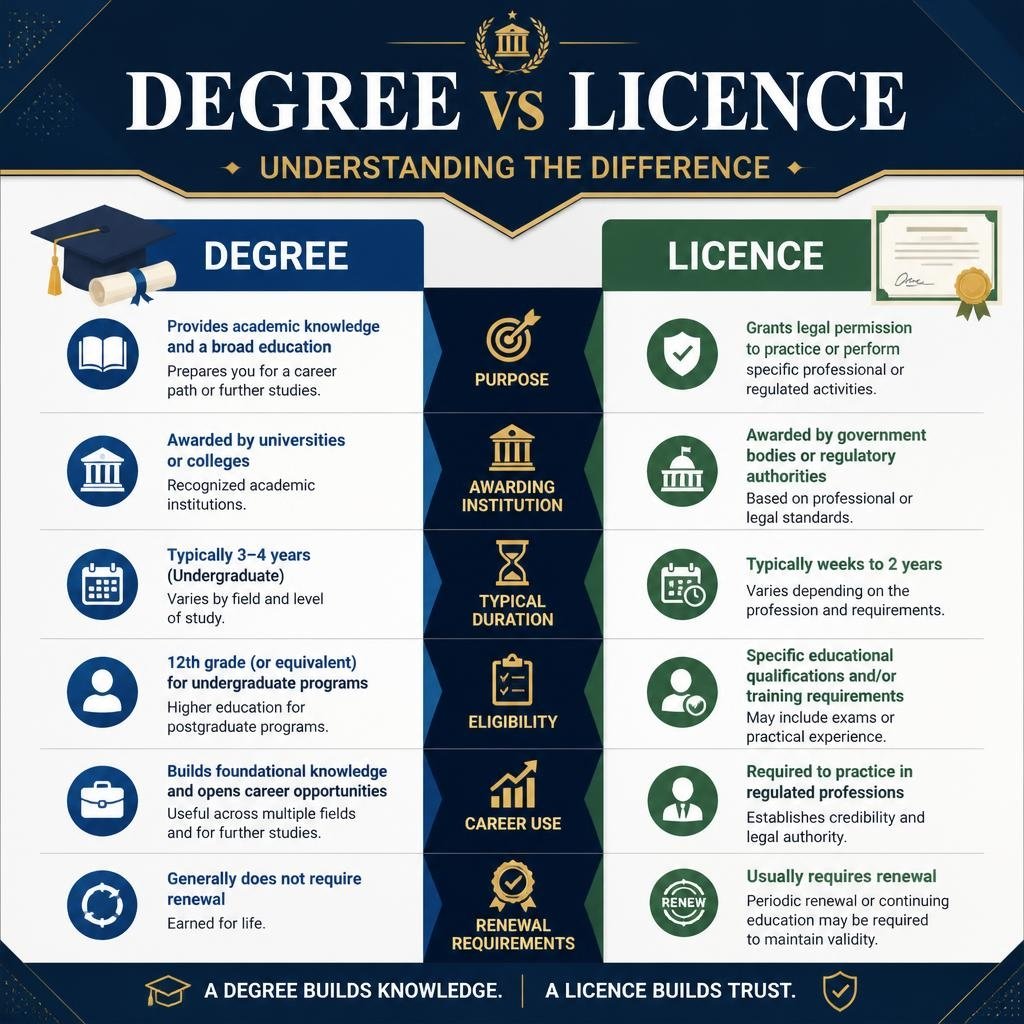
Many professions in Nigeria are regulated or supported by professional bodies. Depending on your field, examples may include bodies for engineers, medical practitioners, nurses, pharmacists, lawyers, accountants, architects, town planners, surveyors, and others. Some offer student or graduate membership, which can add credibility and open networking and training opportunities. Registration and licensing rules vary and change, so confirm requirements directly with the relevant body. A degree and a professional licence are not always the same thing.
Keep your academic records ready
Prepare scanned copies of your admission letter, O’level results, statement of result, and any other documents likely to be requested. Keep them in a secure, private folder, separate from your public portfolio. Avoid posting identity documents, examination numbers, or other sensitive records publicly.
Field-Specific Portfolio Guides
The core steps apply to everyone, but the content differs by discipline. The ideas below are starting points. Adapt them to your own course, institution, and career aims, and consult lecturers and professionals in your field.
Engineering and Technology
- What to show: design projects, technical drawings, simulations, prototypes, lab reports, SIWES technical reports, and problem-solving case studies.
- Add context: state your design constraints (cost, materials, time, safety), your calculations, and how you tested or validated the result.
- Show professionalism: mention relevant standards you followed and any supervisor feedback. Note any steps toward registration with the relevant regulatory body, where applicable.
- Idea: document a small, real repair, installation, or improvement project and explain what you learned about reliability and safety.
Computer Science, Data, and Information Technology
- What to show: working applications, code repositories with clear README files, data analysis notebooks, dashboards, and technical write-ups.
- Add context: explain the problem, your architecture or approach, tools used, and how someone can run or test your project.
- Show professionalism: write clean, commented code, commit regularly, and credit libraries or tutorials you used.
- Idea: build a tool for a real local need, such as inventory tracking for a small shop or a results-checking tool for a student association, and write about how you built and tested it.
Business, Accounting, Economics, and Management
- What to show: financial analyses, case study solutions, business plans, market research reports, spreadsheets with clear models, audit or bookkeeping exercises, and presentations.
- Add context: explain assumptions, data sources, and recommendations. Clean spreadsheets with documented formulas impress reviewers.
- Show professionalism: protect real company data and use dummy or published data where necessary.
- Idea: analyse the published annual reports of a listed company and prepare a brief, balanced review of its performance, clearly stating your sources and limits.
Law and Legal Studies
- What to show: moot and mock trial records, legal research memos, case comments, legislative analyses, and well-edited essays.
- Add context: state the issue, the applicable law, your reasoning, and the conclusion. Cite authorities accurately.
- Show professionalism: never disclose confidential or privileged information, and anonymise any real matters you worked on during placements.
- Idea: write a short, plain-language explainer on a common legal issue affecting students or small businesses, reviewed by a lecturer or practitioner before publication.
Medicine, Nursing, Pharmacy, and Health Sciences
- What to show: community health outreach reports, health education materials, research projects, audit or quality-improvement summaries, and reflective notes on learning experiences.
- Add context: emphasise teamwork, communication, ethics, and learning.
- Show professionalism: never publish patient information, images, or identifiable case details. Follow your faculty’s, hospital’s, and regulatory body’s rules on confidentiality and social media use. A private reflective record is often more appropriate than a public portfolio for clinical material.
- Idea: design and evaluate a simple health education session or leaflet for a community, with permission and supervision.
Sciences (Biology, Chemistry, Physics, Mathematics, Statistics)
- What to show: research proposals, lab reports, data analyses, field study summaries, statistical projects, and clear explainers.
- Add context: state your hypothesis, methods, data, results, and limitations.
- Show professionalism: use proper referencing and acknowledge supervisors and collaborators.
- Idea: analyse a publicly available dataset related to a local issue, such as rainfall patterns, crop yields, or public health indicators, and present your method and limits clearly.
Mass Communication, English, Languages, and Creative Arts
- What to show: published articles, scripts, audio and video samples, social media campaigns, design work, photography, and editing samples.
- Add context: explain the audience, platform, objective, and any results.
- Show professionalism: credit collaborators, respect copyright and music licensing, and obtain consent from people featured in your work.
- Idea: produce a short documentary or a themed article series and track audience response honestly.
Education
- What to show: lesson plans, scheme-of-work samples, teaching aids, assessment designs, micro-teaching reflections, and teaching practice observations.
- Add context: explain learning objectives, how you adapted to different learners, and what you would improve next time.
- Show professionalism: protect children’s identities, obtain permission before sharing classroom photos or videos, and follow school policies.
- Idea: create a short, well-structured resource pack for a topic pupils often find difficult.
Agriculture, Environmental Sciences, and Related Fields
- What to show: field trial records, farm management plans, extension outreach reports, market studies, soil or water analysis summaries, and sustainability projects.
- Add context: include location, conditions, methods, and results.
- Show professionalism: record data carefully and credit any farm owners or institutions that supported you.
- Idea: document a small, well-managed demonstration plot or a value-chain study on a locally important crop.
Architecture, Estate Management, Surveying, and Built Environment
- What to show: design studio work, drawings, models, site analyses, measured surveys, valuation exercises, and photographs of completed work.
- Add context: explain the brief, site conditions, design decisions, and constraints.
- Show professionalism: use high-quality visuals, a consistent layout, and clear labels.
- Idea: prepare a redevelopment proposal for a small campus or community space, with sketches and a basic cost outline.
Social Sciences, Humanities, and Public Administration
- What to show: policy briefs, research essays, survey reports, interview-based studies, community needs assessments, and conference papers.
- Add context: explain your research question, method, sample, and findings.
- Show professionalism: follow research ethics when collecting data, obtain consent from participants, and protect identities.
- Idea: write a short policy brief on a local issue, backed by credible sources and balanced analysis.
Building a Portfolio Under Nigerian Realities: Data, Power, Devices, and Money
Advice written for students elsewhere often assumes fast, cheap internet, constant electricity, and a good laptop. Many Nigerian students do not have those. The good news is that portfolio building can be adapted to real constraints.
If data is expensive
- Plan your online time. Do research, downloads, and uploads in batches rather than browsing aimlessly. Use campus Wi-Fi, library networks, or offers from your network provider when they are available and reliable.
- Work offline first. Draft your case studies in a word processor, prepare images and documents offline, then upload when you have a stable connection.
- Compress files. Reduce image and PDF sizes before sharing so reviewers on slow connections can open your portfolio.
- Choose lightweight formats. A clean PDF often loads faster than a heavy website with large video files.
If power is unreliable
- Save your work frequently and use cloud backups so that sudden outages do not cost you hours of effort.
- Use phone-based tools where possible, since many writing, design, and presentation tasks can be done on a smartphone.
- Charge devices and power banks when electricity is available, and schedule long tasks for times when power is more stable on your campus or at your hostel.
- Many universities have libraries, ICT centres, or innovation hubs where students can work. Ask what your institution offers and what the rules for access are.
If you do not have a laptop
A laptop helps for coding, video editing, and heavy design work, but it is not essential for every field. A smartphone can handle documentation, writing, photography, basic design, and many forms of research. If you need to use shared computers, keep your files in cloud storage so you can open them anywhere, and always sign out of your accounts afterward. If you are planning to buy a device, buy only what you can afford, and avoid borrowing money for equipment before you know what you need.
If money is tight
- Prefer free or low-cost tools and resources, especially at the start.
- Look for free learning materials, library resources, departmental workshops, and student chapters of professional bodies.
- Avoid paying anyone to “build your portfolio” or “write your projects.” Work that you did not do is a liability in interviews, and some services are scams.
- Be wary of any programme that demands upfront fees for guaranteed internships, jobs, or visas.
If you are balancing strikes, delayed calendars, and a heavy workload
Academic calendar disruptions are a reality for many Nigerian students. Use unexpected breaks productively and deliberately: finish a project, learn a skill, volunteer, or start a small venture. Even one focused project during a break can strengthen your portfolio considerably. At the same time, protect your wellbeing. A portfolio should not come at the cost of your health, your results, or your finances.
How to Use SIWES and Industrial Training to Strengthen Your Portfolio
SIWES is a skills-development scheme designed to expose students to real working environments. It is coordinated by the Industrial Training Fund (ITF) in collaboration with regulatory and supervisory bodies and institutions. Exact durations, levels at which students go, and institutional procedures differ depending on your programme and school, so follow your SIWES unit’s instructions and confirm details with them and with the ITF.
For many students, SIWES is treated as a box to tick. For portfolio-builders, it is a gold mine. Here is how to use it well.
Before SIWES: prepare with intent
- Set learning goals. Write down three to five skills or experiences you want from the placement.
- Choose the placement strategically where you can. A relevant, well-supervised organisation is more valuable than a prestigious name where you will do nothing. If your institution assigns placements, ask your SIWES coordinator how choices are handled.
- Learn the basics beforehand. Arrive with some knowledge of the tools or processes your host organisation uses.
- Prepare to document. Decide how you will keep notes, with the understanding that some material may be confidential.
During SIWES: collect evidence daily
- Keep your logbook detailed and honest, and have your supervisor sign it as required.
- Take brief notes on tasks, tools, problems solved, and lessons learned. Do this daily while the memory is fresh.
- With permission, photograph or save examples of your work (reports, drawings, spreadsheets, procedures you drafted), removing confidential information.
- Ask for additional responsibility. If you finish your tasks, offer to help with another process.
- Identify one small improvement project you can complete during the placement, such as a better filing system, a clearer template, or a simple analysis of a recurring problem.
- Ask for feedback regularly, and write down what you hear.
After SIWES: convert the experience into portfolio pieces
Within two weeks of finishing, while the details are still clear:
- Write your SIWES report with real attention to quality, since it may become one of your main work samples.
- Turn one or two tasks or projects into case studies using the structure from Step 4.
- Request a short recommendation or reference letter from your supervisor.
- Add the placement to your CV and LinkedIn profile with achievement-focused bullet points.
- Thank your host organisation and stay in touch respectfully. Some placements lead to later internships or job opportunities, although this is never guaranteed.
Example SIWES bullet points (hypothetical)
- “Assisted with daily stock reconciliation for a retail business and prepared weekly summaries for the manager.”
- “Supported the laboratory team in routine water sample testing and recorded results under supervision.”
- “Drafted social media content calendars and helped schedule posts for client accounts under the guidance of the senior editor.”
Notice the verbs: assisted, prepared, supported, drafted. They are honest and specific, and they avoid claiming credit for work you did not do.
Final-Year Rescue Plan: Build a Portfolio in Six to Twelve Weeks
If you are already in final year, this compressed plan focuses on what matters most.
| Week | Focus | Key tasks |
|---|---|---|
| 1 | Direction and audit | Choose your target opportunity. Review job descriptions. Gather all existing projects, reports, certificates, and SIWES material into one folder. |
| 2 | Select and plan | Pick two or three best pieces. Decide what is missing. Plan one quick project to fill the biggest gap. |
| 3–4 | Create | Finish or improve your selected projects. Complete the small new project. Take clear screenshots, photos, or exports. |
| 5–6 | Document | Write case studies for each flagship item. Prepare a clean CV. Request references from supervisors and lecturers. |
| 7–8 | Publish | Choose your platform. Build the PDF portfolio or simple site. Complete your LinkedIn profile. Test all links on a phone. |
| 9–10 | Review | Ask a lecturer, mentor, or senior colleague to review your portfolio. Fix spelling errors and unclear sections. |
| 11–12 | Apply and iterate | Start applying to internships, graduate roles, or programmes. Tailor your portfolio to each opportunity. Keep improving it. |
This plan is demanding, so adapt it around exams and project deadlines. If you can only manage a smaller version, a strong one-page CV, two good case studies, and a complete LinkedIn profile are already a meaningful step.
Bridging Into NYSC and Life After Graduation
The National Youth Service Corps (NYSC) is a mandatory one-year programme for eligible Nigerian graduates, and eligibility, mobilisation procedures, and deadlines are determined by the NYSC. Always rely on the NYSC’s official announcements for current requirements.
Your portfolio can make your service year more productive.
- Placement and Community Development Service. Include any skills or projects in your documents. A clear portfolio helps you explain what you can contribute, although placement decisions follow NYSC and host-organisation processes.
- Primary assignment. If you have the chance to influence your role, a portfolio can help you propose useful contributions to your host organisation.
- Community Development Service (CDS). CDS projects can become excellent portfolio pieces. Plan them carefully, document your role, measure results, and obtain permission to share photos or details.
- Skill acquisition programmes. NYSC offers opportunities for skills training. Choose options that align with your direction, and document what you learn and build.
- Networking. Fellow corps members, supervisors, and community contacts can become valuable professional connections.
After NYSC, update your portfolio with new projects and impact, and use it for job applications, postgraduate admissions, or entrepreneurship.
Making Your Portfolio Visible: Networking Without Pressure
A portfolio that nobody sees cannot help you. Visibility does not mean self-promotion at all costs. It means making your work easy to find and being useful to others.
Share the right way
- Post about your projects. On LinkedIn or other professional platforms, share what you built, what you learned, and what you would do differently. Short, honest posts work better than exaggerated announcements.
- Teach what you know. Writing a simple guide, tutorial, or explanation for other students demonstrates expertise and helps your community.
- Credit others. Thank teammates, supervisors, and organisations. It builds goodwill.
Build relationships before you need them
- Attend departmental seminars, career talks, conferences, and student chapters of professional bodies.
- Ask thoughtful questions after talks, and follow up with a short message.
- Request brief informational conversations with alumni or professionals. Prepare specific questions, respect their time, and do not ask for a job in the first message.
- Join relevant online communities and contribute helpfully, rather than just promoting yourself.
Use your institution’s resources
Many universities have career or counselling units, alumni associations, entrepreneurship or innovation centres, and departmental mentors. Ask what exists at your institution, since services differ widely. Lecturers and heads of department can often introduce you to professional contacts or opportunities.
Stay safe online
Unfortunately, some fake recruiters and scammers target students. Be cautious if an opportunity:
- Asks you to pay a fee to “secure” a job, internship, or interview.
- Uses a free email address instead of an official company domain, or refuses to provide verifiable details.
- Asks for sensitive documents, bank details, or passwords early in the process.
- Pressures you to act immediately.
- Promises unusually high pay for little or no work.
Verify companies independently through their official websites, trusted contacts, and, where relevant, official registries. When unsure, ask a lecturer, mentor, or career officer.
Ethics, Originality, and Academic Honesty
Your portfolio represents your integrity as much as your skill. Keep these principles in mind.
- Own your work. Include only work you genuinely did, and describe your role accurately. Do not present a group project as entirely yours.
- Cite your sources. Credit libraries, templates, datasets, images, and ideas that came from others.
- Respect copyright. Use licensed or original images, music, fonts, and software. Do not use someone else’s designs, photographs, or writing without permission or proper licensing.
- Respect privacy. Remove personal data from documents, and get consent before including photos or details of other people.
- Do not fabricate. Never invent awards, certificates, grades, projects, positions, or testimonials. Employers and institutions can and do verify claims, and false statements can lead to withdrawn offers, disciplinary action, or worse.
- Avoid shortcuts that undermine you. Paid ghost-written projects, copied code, and purchased certificates may seem harmless, but they leave you unable to defend your work in an interview.
- Use AI tools responsibly. AI tools can help you brainstorm, edit, or learn, but your institution and employers may have rules about their use. Be transparent where required, check outputs carefully for errors, and make sure the final work reflects your own understanding.
Common Mistakes to Avoid
These are realistic pitfalls that can weaken an otherwise promising portfolio.
- Starting too late. Waiting until final-year results are out leaves little time to build proof. Starting early gives you room to learn and improve.
- Including everything. Overloaded portfolios hide your best work. Curate ruthlessly.
- No context. Dropping images or files without explaining the problem, your role, and the result makes it hard for reviewers to judge your contribution.
- Vague claims. Phrases like “hardworking team player” mean little without examples. Show, do not just tell.
- Inconsistent presentation. Mixed fonts, typos, broken links, and unclear naming create an impression of carelessness. Proofread and test every link.
- Ignoring the audience. A portfolio for a bank, a nonprofit, a scholarship panel, and a software startup should not look identical. Adjust emphasis for each.
- Ignoring mobile users. Many reviewers will open your link on a phone. Check that everything displays properly.
- Unprofessional contact details. A silly email address or outdated phone number can cost you opportunities.
- Breaking confidentiality. Sharing sensitive workplace, patient, client, or school information can cause serious harm and damage your reputation.
- Never updating. Old, abandoned portfolios suggest that you are no longer active. Review it every few months.
- Relying only on certificates. Certificates alone do not prove ability; pair them with projects.
- Waiting for perfection. A decent portfolio published now is more useful than a perfect one that never launches. Publish, collect feedback, and improve.
- Using fake or inflated credentials. This is the most damaging mistake of all.
Worked Scenarios (Hypothetical Examples)
The following examples are invented to illustrate how the process works. They are not real people, and outcomes are not promises.
Scenario 1: A 200 Level Biochemistry student with no experience
Amaka is in her second year and feels she has “nothing to show.” She spends one weekend collecting her best lab reports, a seminar presentation, and a certificate from a short data-analysis course. She decides to aim for laboratory and quality-assurance roles, with a secondary interest in research. Over the next semester, she rewrites two lab reports into clean technical summaries, starts a simple blog explaining lab techniques to first-year students, and creates a LinkedIn profile. By 300 Level, she uses SIWES in a food-testing laboratory, documents one process she learned, and requests a recommendation from her supervisor. By final year, she has three case studies, a clear CV, and a short, well-edited portfolio PDF.
Scenario 2: A final-year Accounting student with six weeks before applications open
Tunde has strong grades but no portfolio. He follows the compressed plan: he gathers his projects, selects a financial statement analysis from class, builds a clear spreadsheet model for a small business he helped with bookkeeping (with the owner’s consent and sensitive figures removed), and writes two short case studies. He cleans up his CV, finishes his LinkedIn profile, and asks two lecturers for references. He applies to several graduate programmes and internships with a tailored version of his portfolio for each.
Scenario 3: A Law student worried about confidentiality
Chioma completed an internship at a law firm and cannot share any client documents. Instead, she builds a portfolio containing a moot court memorial, a legal research essay, and a plain-language explainer on tenancy rights for students, which her lecturer reviewed. For her internship, she describes the type of work she did, such as research, drafting support, and filing, without naming clients or revealing facts. She asks her supervising lawyer for a short reference letter.
Scenario 4: A Computer Science student with limited data and power
Ibrahim has no personal laptop and relies on campus computers and his phone. He writes code during available lab hours and keeps backups in cloud storage. He builds one small app for a student association, documents it in a short case study with screenshots, and shares the project through a code repository and a one-page PDF. He uses his phone for LinkedIn updates and schedules uploads for when he has reliable Wi-Fi.
Portfolio Readiness Checklist
Use this checklist before you share your portfolio.
Direction and content
- I have a clear target (roles, programmes, or opportunities).
- My portfolio includes two to four strong flagship projects.
- Each project has a clear case study with problem, role, process, result, and learning.
- I have included evidence such as files, images, links, or reports.
- My role in each team project is clearly stated.
Credibility and honesty
- All claims are accurate and can be explained in an interview.
- I have permission to share all workplace, client, community, or personal information.
- Sensitive information has been removed or anonymised.
- Sources, collaborators, and tools are credited.
Presentation
- The portfolio is easy to scan and consistently formatted.
- Spelling, grammar, and numbers have been checked.
- All links work and are set to the correct permissions.
- It loads and reads well on a phone.
- File sizes are reasonable for slow connections.
Supporting materials
- My CV is concise, updated, and tailored.
- My LinkedIn profile is complete and consistent.
- My email address is professional.
- I have at least two referees who agreed to speak for me.
- I have backed up everything in at least two places.
Maintenance
- I know when I will next update the portfolio.
- I have a plan to add new projects each semester.
Frequently Asked Questions
Do I need a portfolio if I am studying a course like Law, Medicine, or Nursing?
It can still help, but the form is different. In regulated or confidentiality-sensitive fields, your public portfolio may focus on research, community work, education materials, writing, and leadership, while detailed clinical or client-related records stay private. Follow your institution’s and professional body’s rules.
How many projects should a student portfolio have?
There is no official number. For most students, two to four strong flagship projects, plus a few smaller supporting items, is a sensible target. Quality, relevance, and clear documentation matter more than quantity.
Is a personal website necessary?
No. A neat PDF portfolio and a complete LinkedIn profile can be enough, particularly if data or devices are limited. A personal website helps in visual, technical, and international contexts because it provides a single professional link, but it is optional.
Can I include group projects?
Yes, provided you clearly state your role, credit your teammates, and explain your specific contribution. Reviewers understand that much real work is collaborative.
What if I have no SIWES, internship, or work experience yet?
Use academic projects, self-initiated work, volunteering, competitions, and campus leadership. Many strong early portfolios are built entirely from these. Experience can be added later.
Should I put my portfolio link on my CV?
Yes. Place it in the header with your contact details, and, where relevant, link to specific projects within your experience or project sections. Test the links before sending.
Can a portfolio replace a CV or a degree?
No. Most employers and institutions still require a CV, official academic records, and, where relevant, professional registration. A portfolio complements these by providing evidence of what you can do.
How often should I update my portfolio?
Review it at least once each semester and after any major project, internship, or achievement. Before applying for a role or programme, check that everything is current and tailored to the opportunity.
Will having a portfolio guarantee me a job or admission?
No. A portfolio strengthens your application, but hiring and admission decisions depend on many factors, including competition, requirements, timing, and employer needs. Treat the portfolio as one important part of a broader preparation strategy.
Conclusion: Start Small, Be Honest, and Keep Building
Building a professional portfolio as a Nigerian university student is less about technology and more about habits: choosing a direction, saving your work, turning experiences into evidence, explaining your contribution honestly, and presenting everything clearly. You do not need to be the most advanced student in your department. You need to be deliberate.
If you are in the early years, start a folder today and decide on one skill to develop this semester. If you are in the middle of your programme, plan your SIWES and your next project with your portfolio in mind. If you are close to graduation, follow the compressed plan, publish a simple version, and improve it as you apply. Whatever stage you are at, remember that a portfolio supports your ambitions but cannot guarantee outcomes. Combine it with strong academics, good character, networking, relevant skills, and careful verification of every opportunity you pursue.
The best time to start was in 100 Level. The second-best time is this week.