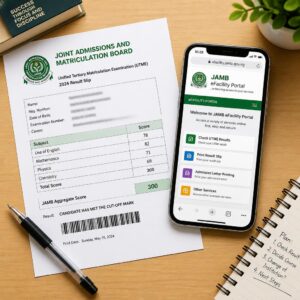
Introduction
You registered for JAMB, sat for the UTME, and now you are staring at your result wondering whether the course or institution you originally chose is still the right fit. Maybe your JAMB score did not meet the cut-off mark for your first-choice university. Maybe you have realised that the course you selected does not align with your O’level subject combination. Or perhaps you simply had a change of heart after speaking with a mentor, a teacher, or a family member who understands the Nigerian job market better than you did at the time of registration.
Whatever the reason, you are not alone. Every year, hundreds of thousands of Nigerian JAMB candidates apply for a change of course, a change of institution, or both. The Joint Admissions and Matriculation Board (JAMB) provides an official data correction window that allows candidates to modify certain details on their registration profile, including their chosen course of study and their preferred institutions.
However, the process can be confusing if you have never done it before. Candidates often ask questions like: How much does it cost? Can I change both my course and my institution at the same time? How many times am I allowed to make changes? Will changing my course reduce my chances of gaining admission? What happens if I make a mistake during the process?
This comprehensive guide answers every one of those questions and more. By the time you finish reading, you will understand exactly how to change your course or institution through JAMB, what to prepare before you begin, what to expect after you submit your request, and the common mistakes you must avoid to protect your admission chances.
Quick Answer
To change your course or institution on JAMB, log in to your JAMB profile at efacility.jamb.gov.ng, navigate to the “Registration” section, select “Correction of Data,” choose either “Course/Institution” or the specific change you need, pay the required fee through Remita (typically ₦2,500 per correction), fill in your new preferences, and submit. You can make this correction during the official JAMB data correction window, which usually opens after the UTME examination and remains available for several months. Each correction attracts a separate fee, and JAMB generally allows a limited number of changes per admission cycle.
What Is JAMB Change of Course or Institution?
The JAMB change of course or institution is an official data correction service provided by the Joint Admissions and Matriculation Board that allows registered UTME and Direct Entry candidates to modify their originally selected course of study, their preferred institution, or both.
When you registered for JAMB, you were required to select:
- First-choice institution (university, polytechnic, or college of education)
- Second-choice institution (if applicable)
- First-choice course (programme of study at your first-choice institution)
- Second-choice course (programme of study at your second-choice institution)
These selections were based on the information you had at the time of registration. But circumstances change. Your UTME score may be higher or lower than you expected. You may discover that your O’level results do not meet the requirements for your chosen course. A new institution may have opened admissions for a programme you are more interested in. Or your first-choice institution may have raised its cut-off mark beyond your score.
The JAMB change of course or institution service exists precisely for situations like these. It gives you a formal, legitimate pathway to update your preferences so that your JAMB profile accurately reflects where you want to study and what you want to study.
Understanding the Terminology
Before we go further, let us clarify some terms you will encounter throughout this guide:
- Change of Course: This means you are keeping the same institution but switching to a different programme of study. For example, you originally chose Medicine and Surgery at the University of Lagos, but you now want to study Nursing Science at the same university.
- Change of Institution: This means you are keeping the same course but switching to a different school. For example, you originally chose the University of Ibadan as your first-choice institution, but you now want to switch to Obafemi Awolowo University.
- Change of Course and Institution: This means you are changing both the school and the programme simultaneously. For example, you originally chose Medicine at the University of Benin, but you now want to study Pharmacy at the University of Lagos.
- Data Correction: This is the broader JAMB service category that includes changes to your name, date of birth, gender, state of origin, passport photograph, course, institution, and other profile details. Change of course and institution falls under this umbrella.
- JAMB CAPS (Central Admission Processing System): This is the online platform where JAMB manages admission offers, acceptances, rejections, and related processes. After you change your course or institution, the update will reflect on your CAPS dashboard.
Why Do Candidates Change Their Course or Institution?
Understanding why other candidates make changes can help you evaluate whether a change is the right decision for your own situation. Here are the most common reasons Nigerian JAMB candidates apply for a change of course or institution:
1. Low UTME Score
This is the single most common reason. If you scored 180 in your UTME but your first-choice institution requires a minimum of 200 for your chosen course, you are unlikely to receive an admission offer from that institution for that programme. In this situation, changing to a course with a lower cut-off mark or switching to an institution with a more accessible cut-off can significantly improve your chances.
Example: A candidate who scored 178 and originally chose Medicine and Surgery at the University of Nigeria, Nsukka (UNN) may decide to change to a course like Medical Laboratory Science at a state university where the cut-off is lower.
2. O’level Subject Combination Mismatch
Sometimes candidates discover after their WAEC, NECO, or NABTEB results are released that they do not have the required subject combination for their chosen course. For instance, if you want to study Engineering but you did not sit for or pass Physics in your O’level, most universities will not consider your application regardless of your JAMB score. Changing to a course that matches your available O’level subjects is a practical solution.
3. Change of Interest or Career Goals
It is perfectly normal for a young person’s interests to evolve between the time of JAMB registration and the time of admission. You may have chosen Law because your parents wanted it, only to realise later that your true passion lies in Computer Science or Mass Communication. The JAMB data correction window gives you the flexibility to align your application with your genuine interests.
4. High Competition at First-Choice Institution
Some Nigerian universities are extremely competitive. Institutions like the University of Lagos (UNILAG), University of Ibadan (UI), Obafemi Awolowo University (OAU), and Ahmadu Bello University (ABU) receive tens of thousands of applications for a limited number of admission slots. If you realise that your score, while decent, may not be competitive enough at your first-choice institution, switching to a less competitive but still reputable university can be a smart strategic move.
5. Financial Considerations
Tuition fees, accommodation costs, and the general cost of living vary significantly between Nigerian universities. Federal universities tend to be more affordable than private universities. A candidate who initially chose a private university may later realise that the financial burden is too heavy and decide to switch to a federal or state institution.
6. Geographical Preferences
Some candidates initially choose institutions far from home but later decide they would prefer to study closer to their family. Others may want to move to a different region for personal or security reasons. JAMB allows you to change your institution to one that better suits your geographical preferences.
7. Accreditation Concerns
If you discover that the course you selected at your chosen institution has lost its accreditation or has accreditation issues with the National Universities Commission (NUC), it is wise to change to an institution where the programme is fully accredited. Studying an unaccredited course can create serious problems when you graduate, including difficulties with NYSC mobilisation and professional registration.
8. Admission Advice from Experts
Many candidates seek guidance from teachers, school counsellors, education consultants, or older siblings who have gone through the admission process. After receiving informed advice, a candidate may decide that a different course or institution offers better prospects.
When Can You Apply for a Change of Course or Institution?
Timing is one of the most critical aspects of the JAMB change of course or institution process. You cannot make changes at just any time of the year. JAMB opens a specific data correction window during each admission cycle, and you must complete your changes within that period.
The Typical Timeline
While the exact dates vary from year to year, the general timeline follows this pattern:
| Phase | Typical Period | What Happens |
|---|---|---|
| UTME Registration | January – March | Candidates register and select courses/institutions |
| UTME Examination | April – May | Candidates sit for the examination |
| UTME Results Released | May – June | Candidates check their scores |
| Data Correction Window Opens | June – July | JAMB opens the correction portal |
| Data Correction Window Closes | October – December | JAMB closes the correction portal (dates vary) |
| Post-UTME and Admissions | August – January | Institutions conduct screening and release admission lists |
Key Points About Timing
- The data correction window usually opens after the UTME results are released. This makes sense because most candidates decide to change their course or institution based on their actual UTME score.
- The window typically remains open for several months. JAMB understands that candidates need time to make informed decisions, especially those who are waiting for O’level results.
- JAMB may extend the deadline. In some admission cycles, JAMB has extended the data correction window in response to candidate requests or operational delays. However, you should never rely on an extension. Always aim to complete your changes well before the published deadline.
- Changes made after the deadline may not be processed. If you miss the window, your original course and institution selections will remain on your profile, and you will be considered for admission based on those original choices.
- Some institutions begin Post-UTME screening before the JAMB correction window closes. This means that if you change your institution very late, you may miss the Post-UTME registration deadline for your new institution. Always check the Post-UTME timelines of your target institution before making a change.
How to Check the Current Deadline
To confirm the exact dates for the current admission cycle:
- Visit the official JAMB website at jamb.gov.ng.
- Check the JAMB e-Facility portal at efacility.jamb.gov.ng for announcements.
- Follow JAMB’s official social media accounts for updates.
- Check reputable Nigerian education websites like Toolfol.com for verified updates.
Important: Do not rely on unverified social media posts or WhatsApp broadcast messages for deadline information. Always confirm through official JAMB channels.
How Much Does JAMB Change of Course or Institution Cost?
The cost of changing your course or institution on JAMB is relatively affordable, but it is important to understand the fee structure so you are not caught off guard.
Current Fee Structure
As of the most recent admission cycles, the standard fees are:
| Type of Change | JAMB Fee | Total Estimated Cost |
|---|---|---|
| Change of Course only | ₦2,500 | ₦2,500 – ₦3,500 |
| Change of Institution only | ₦2,500 | ₦2,500 – ₦3,500 |
| Change of Course and Institution (simultaneously) | ₦2,500 – ₦5,000 | ₦3,000 – ₦6,000 |
Understanding the Costs
- The JAMB fee itself is typically ₦2,500 per correction. This is the amount that goes directly to JAMB through the Remita payment platform.
- Additional charges may apply. When you pay through Remita, there may be a small transaction fee (usually between ₦100 and ₦500) depending on the payment channel you use (bank transfer, card payment, USSD, etc.).
- Cybercafé charges are separate. If you go to a cybercafé or a JAMB-accredited CBT centre to process the change, the operator may charge an additional service fee, typically between ₦500 and ₦1,500. This is not a JAMB fee; it is a service charge for the operator’s time and resources.
- Each correction is charged separately. If you change your course today and then decide to change your institution next week, you will pay the fee twice. This is why it is important to be certain about your new choices before you submit.
Payment Methods
JAMB processes payments through the Remita platform. You can pay using:
- Debit or credit card (Visa, Mastercard, Verve)
- Bank transfer
- USSD banking
- Remita wallet
- Payment at a bank branch using a Remita Retrieval Reference (RRR) number
Tip: If you are paying with a card, make sure the card is enabled for online transactions. Many Nigerian bank cards have online transaction limits or restrictions that can cause payment failures.
Requirements Before You Begin
Before you start the change of course or institution process, make sure you have the following ready:
Essential Requirements Checklist
- ✅ Your JAMB registration number. This is the number you received when you first registered for UTME or Direct Entry. It typically starts with the year of your examination (e.g., 12345678AB).
- ✅ Your JAMB profile login credentials. You need the email address and password you used to create your JAMB profile on the e-Facility portal. If you have forgotten your password, you can reset it using the “Forgot Password” option on the login page.
- ✅ Your phone number. The phone number linked to your JAMB profile should be active and accessible. JAMB may send OTP (One-Time Password) verification codes to this number during the process.
- ✅ A valid payment method. Have your ATM card, bank account details, or Remita wallet ready for the payment step.
- ✅ Your new course and institution choices. Before you log in, research and decide exactly which course and institution you want to change to. Do not start the process and then begin searching for options while the portal is open. This increases the risk of errors.
- ✅ Knowledge of the new course requirements. Confirm that you meet the JAMB subject combination and O’level requirements for your new course. Changing to a course you are not eligible for is a waste of time and money.
- ✅ A reliable internet connection. The JAMB e-Facility portal can be slow during peak periods. A stable internet connection will help you complete the process without timeouts or errors.
- ✅ A device with a modern browser. Use a laptop, desktop, or smartphone with an updated browser (Chrome, Firefox, Edge, or Safari). Avoid using outdated browsers that may not display the portal correctly.
Step-by-Step Guide: How to Change Your Course on JAMB
Follow these steps carefully to change your course of study on the JAMB e-Facility portal. Read through the entire process once before you begin so you know what to expect.
Step 1: Visit the JAMB e-Facility Portal
Open your web browser and go to efacility.jamb.gov.ng. This is the official JAMB online portal for all candidate services, including data corrections.
Note: Make sure you are on the genuine JAMB website. Beware of fake websites that mimic the JAMB portal to steal candidate information. The correct URL always starts with “efacility.jamb.gov.ng.”
Step 2: Log In to Your JAMB Profile
Enter your registered email address and password in the login fields. Click the “Login” button.
If you have forgotten your password, click on “Forgot Password” and follow the instructions to reset it. You will need access to the email address you used during registration.
Step 3: Navigate to the Correction of Data Section
Once you are logged in, you will see your JAMB profile dashboard. Look for the menu or sidebar on the left side of the screen. Find and click on “Registration” or “Services” (the exact label may vary slightly depending on the current portal design).
From the dropdown or submenu, select “Correction of Data.”
Step 4: Select “Course/Institution”
Under the Correction of Data options, you will see several categories, including:
- Name
- Date of Birth
- Gender
- State/LGA
- Passport Photograph
- Course/Institution
Click on “Course/Institution” to proceed.
Step 5: Make Payment
Before you can make any changes, you must pay the correction fee. The portal will generate a Remita Retrieval Reference (RRR) number and prompt you to make a payment.
- Review the fee amount displayed on the screen.
- Choose your preferred payment method (card, bank transfer, USSD, etc.).
- Complete the payment.
- Wait for the payment confirmation. Do not close the browser window while the payment is processing.
Once the payment is confirmed, the portal will unlock the course/institution change form.
Step 6: Select the Change Type
You will now see options to change:
- Course only (keeping the same institution)
- Institution only (keeping the same course)
- Both course and institution
Select the option that matches your intention. For this section, we are focusing on changing your course only.
Step 7: Choose Your New Course
The portal will display a list of available courses. Use the dropdown menus to:
- Select your institution (this should remain the same if you are only changing your course).
- Select your new course of study from the list of programmes offered by that institution.
Important: The courses displayed in the dropdown are the programmes that the institution has indicated to JAMB as available for the current admission cycle. If the course you want is not listed, it may mean that the institution is not offering that programme through JAMB for the current year, or the programme may not be available for your admission type (UTME or Direct Entry).
Step 8: Review Your Selection
Before you submit, carefully review the new course you have selected. Check that:
- The institution name is correct.
- The course name is exactly what you intended.
- You have selected the correct choice (first choice or second choice, depending on what you are modifying).
Warning: Once you submit the change, it may be difficult or impossible to reverse it without paying the fee again and going through the entire process a second time. Take your time at this stage.
Step 9: Submit the Change
Click the “Submit” button to finalise your change of course. The portal should display a confirmation message indicating that your request has been received and processed.
Step 10: Confirm the Change on Your Profile
After submission, navigate back to your JAMB profile dashboard and check your registration details. Your new course should now be reflected on your profile. You can also check your JAMB CAPS dashboard to verify that the change has been applied.
Tip: Take a screenshot of the confirmation page and your updated profile for your records. This can be useful if there are any discrepancies later.
Step-by-Step Guide: How to Change Your Institution on JAMB
The process for changing your institution is very similar to changing your course. The main difference is in Step 7, where you will select a new institution instead of a new course.
Step 1: Log In to the JAMB e-Facility Portal
Go to efacility.jamb.gov.ng and log in with your email and password.
Step 2: Navigate to Correction of Data
From your dashboard, go to “Registration” > “Correction of Data.”
Step 3: Select “Course/Institution”
Click on the “Course/Institution” option.
Step 4: Complete the Payment
Pay the required fee through Remita and wait for confirmation.
Step 5: Select “Change of Institution”
Choose the option to change your institution. You may be asked whether you want to change your first-choice institution, your second-choice institution, or both.
Step 6: Choose Your New Institution
Use the dropdown menus to select:
- The type of institution (Federal University, State University, Private University, Federal Polytechnic, State Polytechnic, College of Education, etc.)
- The specific institution you want to switch to (e.g., University of Ilorin, Federal Polytechnic Nekede, etc.)
- The course you want to study at the new institution (this should remain the same if you are only changing the institution, but you may need to re-select it from the new institution’s available programmes).
Step 7: Review and Submit
Carefully review your new institution and course selection. Confirm that everything is correct, then click “Submit.”
Step 8: Verify the Update
Check your JAMB profile and CAPS dashboard to confirm that your new institution is now reflected.
How to Change Both Course and Institution Simultaneously
If you want to change both your course and your institution at the same time, the process is essentially a combination of the two procedures described above.
- Log in to the JAMB e-Facility portal.
- Navigate to Correction of Data > Course/Institution.
- Pay the required fee.
- Select the option to change both course and institution.
- Choose your new institution from the dropdown list.
- Choose your new course from the programmes available at the new institution.
- Review your selections carefully.
- Submit and verify.
Note on fees: In some admission cycles, JAMB charges a single fee for changing both course and institution simultaneously. In other cycles, the system may treat them as two separate corrections and charge you twice. The portal will display the exact fee before you make the payment, so pay attention to the amount shown.
How Many Times Can You Change Your Course or Institution?
This is one of the most frequently asked questions, and the answer requires some nuance.
General Rule
JAMB typically allows candidates to make one or two corrections to their course and institution per admission cycle. However, the exact number of permitted changes can vary from year to year, and JAMB does not always publicise a strict limit in advance.
What This Means in Practice
- First change: You can change your course, your institution, or both once during the data correction window. This is the most straightforward scenario.
- Second change: In many admission cycles, JAMB allows a second correction if you realise you made an error in your first change or if your circumstances change again. However, you will need to pay the correction fee again.
- Multiple changes beyond two: JAMB generally discourages excessive changes. If you attempt to change your course or institution three or more times, the system may block further corrections, or JAMB may require you to visit a JAMB office in person to request additional changes.
Important Considerations
- Each change costs money. Even if the system allows multiple changes, each one attracts a separate fee. Changing your course three times will cost you at least ₦7,500 in JAMB fees alone, not counting cybercafé charges and transaction fees.
- Frequent changes can create confusion. If you change your course or institution multiple times, there is a risk that your JAMB profile may not update correctly, or that your new institution may not receive your details in time for Post-UTME screening.
- JAMB may impose restrictions without prior notice. In some years, JAMB has limited the number of changes to one per candidate without extensive public announcement. Always check the latest JAMB guidelines for the current admission cycle.
Best practice: Make your decision carefully before you submit your first change. Research your options thoroughly, consult with knowledgeable people, and only proceed when you are confident about your new choices.
What Happens After You Submit a Change Request?
Once you have successfully submitted your change of course or institution, several things happen behind the scenes:
1. Your JAMB Profile Is Updated
The most immediate effect is that your JAMB profile will reflect your new course and/or institution. This update is usually instantaneous or takes a few hours, although in some cases it may take up to 24–48 hours during periods of high traffic on the portal.
2. Your JAMB CAPS Dashboard Is Updated
Your CAPS (Central Admission Processing System) dashboard will also be updated to reflect your new preferences. This is important because CAPS is the platform through which institutions send admission offers to candidates. If your CAPS profile still shows your old course or institution, you may not receive admission offers from your new choices.
3. Your New Institution Receives Your Details
JAMB transmits your updated information to your new institution. This means that when the institution compiles its admission list, your name and JAMB score will be included in the pool of candidates for your new course.
4. You May Need to Register for a New Post-UTME
If you change your institution after the Post-UTME registration period for your new school has begun (or after it has ended), you may need to take additional steps:
- If Post-UTME registration is still open: Register for the Post-UTME screening at your new institution as soon as possible.
- If Post-UTME registration has closed: Contact the admissions office of your new institution to inquire about late registration or alternative screening arrangements. Some institutions are flexible; others are not.
- If you already wrote Post-UTME at your old institution: Your Post-UTME score from the old institution will not transfer to the new one. You will need to participate in the screening exercise at your new institution.
5. Your Old Institution Removes You from Their List
Once JAMB processes your change, your old institution will no longer consider you for admission. This is automatic and irreversible. You cannot be admitted by both your old and new institution simultaneously.
How Change of Course or Institution Affects Your Admission Chances
Many candidates worry that changing their course or institution will negatively affect their admission prospects. Let us address this concern honestly.
Does Changing Reduce Your Chances?
In most cases, no. Changing your course or institution through the official JAMB data correction process does not carry any penalty. JAMB does not flag candidates who make changes, and institutions do not discriminate against candidates who changed their preferences. From the perspective of the admission system, you are simply another candidate who chose that course and institution.
When Changing Can Help Your Chances
In many situations, changing your course or institution actually improves your admission chances:
- If your UTME score is below the cut-off mark for your original course, switching to a course with a lower cut-off gives you a realistic chance of admission.
- If your original institution is extremely competitive, switching to a less competitive institution with the same course can move you from the rejection pile to the admission list.
- If your O’level results do not match your original course, switching to a compatible course prevents automatic disqualification.
When Changing Can Hurt Your Chances
There are a few scenarios where a poorly thought-out change can work against you:
- Changing to a course you are not eligible for. If you change to a course that requires an O’level subject you do not have, you will still be disqualified during the institution’s screening process.
- Changing too late. If you change your institution after the new school has already compiled its admission list or closed its Post-UTME registration, you may miss the admission cycle entirely.
- Changing to a more competitive course or institution. If your original choice was already a safe option and you switch to a more competitive one, you may reduce your chances unnecessarily.
The Bottom Line
A well-researched, timely change of course or institution is a strategic tool that can significantly improve your admission prospects. A hasty, uninformed change can create new problems. The key is to do your homework before you make the decision.
JAMB Change of Course vs. Change of Institution: Key Differences
| Feature | Change of Course | Change of Institution |
|---|---|---|
| What changes | Your programme of study | The school you want to attend |
| What stays the same | Your institution | Your course of study |
| When it is most useful | When your O’level subjects or UTME score do not match your original course | When your UTME score is below your original institution’s cut-off |
| Effect on Post-UTME | You may still write Post-UTME at the same institution but for a different course | You will need to write Post-UTME at the new institution |
| Effect on O’level requirements | You must meet the O’level requirements for the new course | O’level requirements remain the same (same course) |
| Effect on JAMB subject combination | Your UTME subjects must be relevant to the new course | No change needed (same course) |
| Typical fee | ₦2,500 | ₦2,500 |
Common Mistakes to Avoid
Changing your course or institution is a straightforward process, but candidates make avoidable mistakes every year. Here are the most common errors and how to prevent them:
1. Changing Without Checking O’level Requirements
This is the most costly mistake. Before you change to a new course, verify that your WAEC, NECO, or NABTEB results meet the O’level requirements for that course at your chosen institution. For example, if you want to change to Medicine, you need credits in English, Mathematics, Physics, Chemistry, and Biology. If you do not have a credit in Chemistry, changing to Medicine is pointless.
How to avoid: Check the admission requirements for your new course on the institution’s official website or on JAMB’s brochure before you make the change.
2. Changing Without Checking JAMB Subject Combination
Your UTME subject combination must be relevant to your new course. If you wrote English, Mathematics, Physics, and Chemistry for Engineering, and you now want to change to Law, your subject combination may not be acceptable because Law typically requires English and three Arts or Social Science subjects.
How to avoid: Consult the JAMB brochure (available on the JAMB website) to confirm the acceptable UTME subject combination for your new course.
3. Waiting Until the Last Minute
Some candidates procrastinate and try to change their course or institution a few days before the correction window closes. This is risky because the JAMB portal often experiences heavy traffic near the deadline, leading to slow loading times, payment failures, and system errors.
How to avoid: Complete your change as early as possible within the data correction window. This gives you time to resolve any technical issues and ensures that your new institution receives your details well before their admission processes begin.
4. Not Verifying the Change After Submission
Some candidates submit their change request and assume everything is fine without checking their updated profile. In rare cases, system glitches can cause the change to fail silently, leaving your old preferences in place.
How to avoid: Always log back into your JAMB profile and CAPS dashboard after submitting a change to confirm that your new course and institution are correctly displayed.
5. Paying Through Unofficial Channels
Some candidates pay for JAMB data corrections through unauthorised third parties who promise to “handle everything” for a fee. These intermediaries may overcharge you, make errors on your profile, or disappear with your money.
How to avoid: Always process your change directly through the official JAMB e-Facility portal. If you need assistance, visit a JAMB-accredited CBT centre or a reputable cybercafé, but make sure you are the one logging into your profile and reviewing the changes.
6. Choosing a Course Based Solely on Cut-Off Marks
While it is practical to consider cut-off marks, choosing a course only because it has a low cut-off can lead to long-term dissatisfaction. You may end up studying a programme you have no interest in, which can affect your academic performance and career satisfaction.
How to avoid: Balance practicality with genuine interest. Choose a course that you are both eligible for and reasonably interested in.
7. Ignoring Post-UTME Deadlines at the New Institution
Changing your institution on JAMB does not automatically register you for Post-UTME at the new school. If you do not separately register for the new institution’s screening exercise, you will not be considered for admission even if your JAMB profile is updated.
How to avoid: After changing your institution, immediately check the new school’s admission portal for Post-UTME registration details and deadlines.
8. Making Changes Based on Rumours
Every admission season, rumours circulate about which institutions are “about to release admission” or which courses are “guaranteed to give admission.” Making decisions based on unverified information can lead to poor choices.
How to avoid: Base your decisions on verified facts: your actual UTME score, official cut-off marks, your O’level results, and the published admission requirements of your target institution.
Troubleshooting Common Problems
Even when you follow the steps correctly, you may encounter technical or procedural issues. Here are solutions to the most common problems:
Problem 1: Payment Fails or Is Not Confirmed
Symptoms: You complete the payment, but the portal still shows “Payment Pending” or does not unlock the correction form.
Solutions:
- Wait 15–30 minutes and refresh the page. Remita payments sometimes take time to reflect.
- Check your bank statement to confirm that the money was deducted.
- If the money was deducted but the portal has not updated after 24 hours, contact JAMB support through the e-Facility portal or visit the nearest JAMB office with your payment receipt.
- Do not make a second payment until you have confirmed the status of the first one.
Problem 2: The Course You Want Is Not Listed
Symptoms: When you try to select your new course, it does not appear in the dropdown menu.
Solutions:
- Confirm that the institution actually offers the course for the current admission cycle. Check the institution’s official website or the JAMB brochure.
- Verify that you are selecting the correct admission type (UTME vs. Direct Entry). Some courses may be available for Direct Entry but not for UTME, or vice versa.
- Try selecting a different institution first and then returning to your preferred institution. Sometimes the dropdown menu has display glitches.
- If the course is genuinely not available, you will need to choose an alternative.
Problem 3: The Portal Is Slow or Unresponsive
Symptoms: Pages take a long time to load, buttons do not respond, or you receive timeout errors.
Solutions:
- Try accessing the portal during off-peak hours (early morning or late at night).
- Clear your browser cache and cookies.
- Try a different browser or device.
- Use a stable internet connection. Mobile data can be unreliable for portal operations.
- If the problem persists for several days, it may be a JAMB server issue. Be patient and try again later.
Problem 4: Your Change Does Not Reflect on CAPS
Symptoms: Your JAMB profile shows the new course or institution, but your CAPS dashboard still shows the old one.
Solutions:
- Wait 24–48 hours. CAPS updates can take longer than profile updates.
- Log out of CAPS and log back in.
- Clear your browser cache.
- If the discrepancy persists after 72 hours, contact JAMB support or visit a JAMB office.
Problem 5: You Made an Error in Your New Selection
Symptoms: You accidentally selected the wrong course or institution and have already submitted the change.
Solutions:
- If the data correction window is still open, you can make another correction by paying the fee again and selecting the correct course or institution.
- If the window has closed, visit the nearest JAMB office with a valid ID and your JAMB registration number to request a manual correction. Note that manual corrections are not always guaranteed and may take time to process.
Change of Course or Institution for Direct Entry Candidates
Direct Entry (DE) candidates can also change their course or institution through JAMB, and the process is largely the same as for UTME candidates. However, there are a few additional considerations:
Key Differences for DE Candidates
- Course availability: Some courses may be available for UTME candidates but not for Direct Entry candidates at certain institutions. Always verify that your new course accepts Direct Entry applicants.
- DE-specific requirements: Direct Entry admission requires additional qualifications such as A’level results, ND/HND certificates, NCE certificates, or IJMB results. When changing your course, ensure that your DE qualification is relevant to the new programme. For example, if you have an ND in Accounting and you want to change to Engineering, your DE qualification may not be accepted.
- Institutional DE policies: Some universities have specific Direct Entry policies that differ from their UTME policies. For instance, a university may accept DE candidates for Medicine but not for Law. Check the institution’s DE admission requirements before making a change.
- Timing: DE candidates should be especially mindful of timing because DE admission lists are sometimes released on a different schedule from UTME admission lists.
Important Things to Consider Before Changing
Before you commit to a change of course or institution, take time to think through the following factors:
1. Career Implications
Your course of study will significantly influence your career trajectory. Before changing to a new course, research the career opportunities, professional requirements, and job market demand for graduates of that programme in Nigeria. Speak with professionals in the field if possible.
2. Course Duration
Different courses have different durations. For example, Medicine and Surgery typically takes six years, Engineering takes five years, and most Arts and Social Science courses take four years. If you change from a four-year course to a six-year course, be prepared for the additional time and financial commitment.
3. Professional Accreditation
If you are changing to a professionally regulated course such as Medicine, Law, Pharmacy, Nursing, Engineering, or Accounting, confirm that the programme at your new institution is accredited by the relevant professional body (MDCN, Council of Legal Education, PCN, NMCN, COREN, ICAN, etc.). Graduating from an unaccredited programme can prevent you from practising your profession in Nigeria.
4. Financial Implications
Consider the total cost of studying at your new institution, including tuition fees, accommodation, feeding, transportation, and other expenses. If you are switching from a federal university to a private university, the cost difference can be enormous.
5. Location and Living Conditions
If you are changing to an institution in a different city or state, research the living conditions, security situation, and cost of living in that area. Your comfort and safety during your years of study are important.
6. Post-UTME Requirements
Different institutions have different Post-UTME screening formats. Some conduct written examinations, some use oral interviews, and some rely on O’level grades and JAMB scores alone. Understand what your new institution requires so you can prepare adequately.
7. Admission Competitiveness
Research the admission statistics for your new course and institution. How many candidates applied last year? How many were admitted? What was the cut-off mark? This information will help you assess whether your change is likely to improve or reduce your chances.
Frequently Asked Questions
1. Can I change my course after I have been offered admission on JAMB CAPS?
Yes, in some cases. If you have been offered admission on CAPS but you have not yet accepted it, you may be able to reject the offer and apply for a change of course or institution through the data correction portal, provided the correction window is still open. However, once you accept an admission offer on CAPS, making changes becomes much more difficult and may require visiting a JAMB office in person. It is always better to make your changes before admission offers are released.
2. Will my JAMB score change when I change my course or institution?
No. Your UTME score remains the same regardless of how many times you change your course or institution. The change only affects your preferences, not your examination results.
3. Can I change from a university to a polytechnic or college of education?
Yes. JAMB allows candidates to change between different types of institutions. You can switch from a university to a polytechnic, from a polytechnic to a university, from a university to a college of education, or any other combination. The process is the same as changing between two universities.
4. Do I need to inform my new institution after changing on JAMB?
In most cases, JAMB automatically transmits your updated details to your new institution. However, it is good practice to also check the new institution’s admission portal and register for their Post-UTME screening if required. Some institutions may also require you to upload your JAMB result or other documents on their portal separately.
5. Can I change my course to one that has a different JAMB subject combination?
This depends on the institution and the specific course. Some institutions are flexible and will consider candidates whose UTME subjects are not a perfect match for the new course, especially if the subjects are related. Other institutions are strict and will disqualify candidates whose UTME subjects do not match the JAMB brochure requirements. To be safe, choose a new course whose JAMB subject combination aligns with the subjects you wrote in your UTME.
6. Is there a deadline for changing my course or institution?
Yes. JAMB sets a specific deadline for data corrections each admission cycle. The deadline is usually announced on the JAMB website and the e-Facility portal. Once the deadline passes, you will no longer be able to make changes through the online portal. Always check the current deadline and complete your changes well in advance.
7. Can I change my first-choice institution to my second-choice institution?
Yes. If you originally selected Institution A as your first choice and Institution B as your second choice, you can use the data correction process to swap them or to replace your first choice entirely. The process is the same as changing to a completely new institution.
8. What should I do if the JAMB portal shows an error when I try to submit my change?
If you encounter an error during submission, try the following:
- Refresh the page and try again.
- Log out and log back in.
- Clear your browser cache.
- Try a different browser or device.
- If the error persists, take a screenshot of the error message and contact JAMB support through the e-Facility portal, the JAMB helpline, or by visiting the nearest JAMB office.
Conclusion
Changing your course or institution through JAMB is a legitimate, straightforward process that can significantly improve your chances of gaining admission into a Nigerian tertiary institution. Whether you are responding to a lower-than-expected UTME score, an O’level subject mismatch, a change in career interests, or financial realities, the JAMB data correction service gives you the flexibility to realign your application with your current circumstances and goals.
The key to a successful change is preparation. Before you log into the JAMB e-Facility portal, take the time to research your new course and institution thoroughly. Confirm that you meet the O’level requirements, the JAMB subject combination, and any other admission criteria. Check the Post-UTME deadlines at your new institution. Understand the financial implications of your decision. And most importantly, make your choice based on verified information rather than rumours or pressure from others.
Remember these essential points:
- The JAMB data correction window opens after UTME results are released and closes several months later. Do not miss the deadline.
- The standard fee is approximately ₦2,500 per correction, payable through Remita.
- You can change your course, your institution, or both.
- Each change is charged separately, so be certain before you submit.
- Always verify your updated profile on JAMB CAPS after making a change.
- Register for Post-UTME at your new institution promptly after changing.
- Avoid common mistakes such as changing without checking requirements, waiting until the last minute, or paying through unofficial channels.
Your admission journey is a marathon, not a sprint. A well-timed, well-researched change of course or institution can be the difference between spending another year at home waiting for admission and starting your university education this academic session. Use the information in this guide to make an informed decision, follow the steps carefully, and take control of your admission process.
If you have further questions or need clarification on any aspect of the JAMB change of course or institution process, visit the official JAMB website at jamb.gov.ng or the e-Facility portal at efacility.jamb.gov.ng for the most current information. You can also explore other articles on Toolfol.com for comprehensive guidance on JAMB registration, Post-UTME preparation, admission requirements, and course selection.
Good luck with your admission journey.