How Nigerian Students Can Find Scholarships and Bursaries They May Qualify For
Introduction
Paying for education in Nigeria is difficult for many families. Between tuition fees, accommodation, textbooks, transportation, feeding, and other expenses, the financial burden of attending a university, polytechnic, or college of education can be overwhelming — even at public institutions where fees are subsidized.
Scholarships and bursaries exist to reduce this burden. The Nigerian government, state governments, private companies, foundations, international organizations, and individual institutions offer various forms of financial support to students who meet specific criteria. Some cover full tuition. Others pay a fixed stipend once a year. Some are highly competitive awards worth millions of naira. Others are modest but still meaningful bursaries that help with books, fees, or living expenses.
The problem is not that these opportunities do not exist. The problem is that most Nigerian students do not know how to find them, do not understand which ones they may qualify for, do not know when or how to apply, and sometimes fall victim to fraudulent schemes disguised as scholarship programmes.
This guide will help you understand the types of scholarships and bursaries available to Nigerian students, show you practical methods for finding legitimate opportunities, explain how to assess your eligibility before applying, walk you through preparing strong applications, and help you avoid the most common mistakes and scams.
It will not guarantee you a scholarship — no honest guide can do that. But it will give you a clear, organized system for searching, evaluating, and applying for financial support so that you do not miss opportunities you genuinely qualify for.
Quick Summary
If you are looking for scholarships or bursaries as a Nigerian student, these are the key steps:
- Understand the different types of financial support available (federal, state, institutional, corporate, international, and need-based versus merit-based).
- Identify which categories match your background, course of study, academic level, state of origin, and financial situation.
- Search systematically using official sources rather than relying on social media rumours.
- Verify every opportunity before applying — confirm the provider, eligibility requirements, application portal, and deadline.
- Prepare your documents and application materials in advance.
- Apply carefully, follow all instructions, and submit before the deadline.
- Track your applications and follow up appropriately.
- Avoid scams by never paying application fees to third parties or sharing sensitive information on unverified platforms.
The rest of this article explains each step in detail.
Understanding the Types of Scholarships and Bursaries Available in Nigeria
Before searching, it helps to understand what kinds of financial support exist and how they differ. This will make your search more focused and realistic.
Scholarships versus Bursaries
These terms are sometimes used interchangeably, but they usually mean different things.
A scholarship is typically a competitive award based on academic merit, talent, specific criteria, or a combination of factors. Scholarships may cover tuition, fees, accommodation, living expenses, books, or a combination of these. Some are full scholarships that cover all educational costs. Others are partial scholarships that cover only a portion.
A bursary is usually a financial grant based primarily on financial need, although some bursaries also have academic requirements. In Nigeria, state government bursaries are the most common example. They typically provide a fixed amount of money — often modest — to indigenes of a state who are enrolled in recognized institutions.
A grant is a sum of money given for a specific purpose, often a research project, a community initiative, or a particular educational activity. Some grants are available to students, but many target organizations, researchers, or institutions.
Understanding these distinctions helps you know what to expect and which opportunities match your situation.
Categories of Scholarships and Bursaries for Nigerian Students
Here is a broad classification of the financial support opportunities available:
| Category | Provider | Typical Basis | Examples |
|---|---|---|---|
| Federal Government Scholarships | Federal Ministry of Education, BEA | Academic merit, course of study, bilateral agreements | Bilateral Education Agreement (BEA) Scholarship, Federal Government Scholarship for Nigerians in specific countries |
| State Government Bursaries and Scholarships | State Scholarship Boards, State Ministries of Education | State of origin, enrolment status, sometimes academic performance | Lagos State Bursary, Edo State Bursary, Rivers State Scholarship, Anambra State Bursary |
| Institutional Scholarships | Universities, polytechnics, colleges of education | Academic performance, financial need, sports, or other criteria set by the institution | University of Lagos scholarship for best graduating students, Covenant University scholarships |
| Corporate and Foundation Scholarships | Private companies and foundations | Academic merit, course of study, state of origin, financial need, or other criteria | NNPC/Total Scholarship, Agbami Scholarship, MTN Foundation Scholarship, Shell SPDC Scholarship, Dangote Foundation Scholarship |
| International Scholarships | Foreign governments, international organizations, foreign universities | Academic excellence, leadership potential, field of study, research capacity | Commonwealth Scholarship, Chevening Scholarship, DAAD Scholarship, Fulbright Scholarship, Australian Awards Scholarship |
| Community and Religious Organization Scholarships | Community development associations, churches, mosques, alumni groups | Membership, affiliation, community of origin, financial need | Varies widely |
| Professional Body Scholarships | Professional associations and regulatory bodies | Course of study, academic performance | Some professional bodies occasionally offer support to students in their discipline |
Each category has different eligibility rules, application processes, award amounts, and competition levels. Understanding where you fit helps you focus your search.
How to Identify Which Scholarships and Bursaries You May Qualify For
Many students waste time applying for opportunities they are not eligible for, or worse, they never apply at all because they assume nothing is available for them.
Before searching, create a personal eligibility profile. This is simply a list of your characteristics that scholarship providers typically care about.
Your Personal Eligibility Profile
Answer the following questions honestly:
- State of origin: Which state are you from? (This determines eligibility for state bursaries and some corporate scholarships.)
- Local government area: Which LGA? (Some awards target specific LGAs.)
- Academic level: Are you a prospective student, an undergraduate (and what year?), a graduate seeking postgraduate funding, or currently a postgraduate student?
- Institution type: Are you in a federal university, state university, private university, polytechnic, or college of education?
- Course of study: What are you studying? (Many scholarships target specific disciplines — engineering, medicine, sciences, agriculture, education, humanities, etc.)
- Academic performance: What is your current CGPA or most recent academic result? (Many merit-based scholarships require a minimum CGPA, often 3.0/5.0, 3.5/5.0, or higher.)
- Financial situation: Can you demonstrate financial need? Do you have documentation of your family’s financial situation?
- Gender: Some scholarships specifically target female students, particularly in STEM fields.
- Disability status: Some scholarships are reserved for students with disabilities.
- Community or organizational membership: Do you belong to any community association, religious body, alumni network, or professional group that offers educational support?
- Special circumstances: Are you an orphan, from a conflict-affected area, a first-generation university student, or in another category that some providers specifically support?
- Nationality and residency: Are you a Nigerian citizen? Do you reside in Nigeria or abroad? (This matters for international scholarships.)
Write down your answers. This profile becomes your filter. When you find a scholarship, compare its eligibility requirements against your profile before investing time in the application.
A Practical Eligibility Example
Consider a student with this profile:
- Female
- From Edo State, Oredo LGA
- 300-level student at the University of Benin
- Studying Chemical Engineering
- CGPA: 4.12/5.0
- Father is a retired civil servant; mother is a petty trader
- No disability
- Member of her community development association
This student may potentially qualify for:
- Edo State Government bursary (state of origin, enrolled student)
- NNPC/Total scholarship (Nigerian undergraduate studying engineering, subject to meeting all specific requirements)
- Agbami scholarship (Nigerian undergraduate, often targets science and engineering, subject to specific requirements)
- Shell SPDC scholarship (Nigerian undergraduate, science/engineering, often targets Niger Delta region)
- University of Benin internal scholarships (if available for high-performing students)
- Her community development association’s educational support (if it exists)
- Some female-focused STEM scholarships (gender, course of study)
She would likely not qualify for:
- Lagos State bursary (she is not an indigene of Lagos State)
- Postgraduate scholarships like Chevening (she is still an undergraduate)
- Scholarships restricted to 100-level students (she is in 300 level)
- Awards limited to students in private universities
This filtering process saves time and allows you to focus on realistic opportunities.
Where and How to Search for Scholarships Systematically
Most students hear about scholarships through word of mouth — a friend’s WhatsApp message, a social media post, or a notice on a departmental board. While these can occasionally lead to real opportunities, relying solely on informal channels is unreliable and risky.
Here is a systematic approach to searching for scholarships and bursaries.
Source 1: Your State Government Scholarship Board
Almost every state in Nigeria has a scholarship board or a bursary unit within its ministry of education. Many state governments provide annual bursaries to their indigenes who are enrolled in recognized tertiary institutions.
How to find your state’s bursary:
- Search for “[your state name] scholarship board” or “[your state name] state bursary” on a search engine.
- Visit your state government’s official website and look for the ministry of education or scholarship board section.
- Visit the physical office of the scholarship board in your state capital if you cannot find information online. Many state scholarship boards still operate primarily through physical applications and announcements.
- Ask at your institution’s student affairs division — they sometimes receive circulars about state bursaries.
What to expect from state bursaries:
- Eligibility is typically based on being an indigene of the state, being currently enrolled in a recognized institution, and sometimes meeting minimum academic standards.
- The application may require your admission letter, school identity card, evidence of state of origin (LGA identification letter or certificate of origin), recent passport photographs, and sometimes a letter from your institution confirming your enrolment.
- The amounts vary widely. Some states pay ₦5,000–₦10,000 per session. Others pay more. Some states have not disbursed bursaries consistently in recent years.
- Payment delays are common. Do not plan your entire budget around receiving a state bursary on time.
Important note: The availability, amount, and consistency of state bursaries vary significantly from state to state and from one administration to another. Check the current status for your specific state before relying on this as a funding source.
Source 2: The Federal Ministry of Education (Bilateral Education Agreement Scholarships)
The Federal Government of Nigeria, through the Federal Ministry of Education, administers the Bilateral Education Agreement (BEA) Scholarship. This programme sends Nigerian students abroad to study in countries with which Nigeria has bilateral education agreements, including Russia, China, Cuba, Hungary, Turkey, Morocco, Algeria, Egypt, Japan, and others (the list of participating countries may change from year to year).
How to find information:
- Visit the Federal Ministry of Education’s official website.
- Check announcements in major national newspapers and credible education news platforms during the typical application window (usually around the middle of the year, but this varies).
- Search for “Federal Government BEA Scholarship [current year].”
Typical eligibility:
- Nigerian citizens
- Applicants who have completed secondary education with strong O’level results
- Often specific age limits
- Specific course or programme focus depending on the partner country
- Requirements may include proficiency or willingness to learn the language of instruction in the destination country
Note: The BEA scholarship is for study abroad, not for study within Nigeria. Competition is intense, and the selection process typically involves examinations and interviews.
Source 3: Your Institution’s Scholarship and Financial Aid Office
Many Nigerian universities, polytechnics, and colleges of education have internal scholarships, bursaries, or fee-reduction programmes. These are often poorly publicized.
How to find institutional scholarships:
- Visit your institution’s student affairs division or financial aid office and ask what scholarships or bursaries are available.
- Check your institution’s website — look for sections labelled “scholarships,” “financial aid,” “student services,” or “bursary.”
- Check departmental notice boards. Some scholarships are announced only within specific faculties or departments.
- Ask your academic adviser or head of department.
- Check your institution’s student handbook or prospectus. Some institutions list available scholarships and their eligibility criteria in these documents.
Examples of institutional scholarships:
- Vice-Chancellor’s scholarship for the best student in each faculty.
- Departmental awards for students with the highest CGPA.
- Need-based fee reductions for students who can demonstrate financial hardship.
- Sports scholarships for students representing the institution in approved competitions.
- Alumni-funded scholarships administered through the institution.
The amount, availability, and application process depend entirely on the institution. Some are awarded automatically based on results, while others require a formal application.
Source 4: Corporate and Foundation Scholarship Programmes
Several Nigerian companies and foundations offer annual scholarships to undergraduate and sometimes postgraduate students. These are typically among the most competitive opportunities.
Major corporate and foundation scholarships (verify current availability and details before applying):
| Scholarship | Typical Provider | Typical Target | Typical Basis | Notes |
|---|---|---|---|---|
| NNPC/Total Scholarship | NNPC and Total (now TotalEnergies) | Nigerian undergraduates in specific courses (often sciences, engineering, medicine, and related fields) | Academic merit, usually requires a minimum CGPA | Application typically opens annually; check official NNPC or TotalEnergies Nigeria channels |
| Agbami Scholarship | Agbami Partners (Star Deep Water Petroleum, Chevron, etc.) | Nigerian undergraduates in specific courses | Academic merit, often requires high CGPA (e.g., 3.0/5.0 or equivalent minimum) | Application typically opens annually |
| Shell SPDC Scholarship (SPDC JV University Scholarship) | Shell Petroleum Development Company | Nigerian undergraduates, often with emphasis on Niger Delta states and science/engineering | Academic merit, community | Verify current availability through Shell Nigeria’s official channels |
| MTN Foundation Scholarship | MTN Foundation | Nigerian undergraduates in public universities | Academic merit, typically requires high CGPA | Has been offered in past years; verify current status |
| Dangote Foundation Scholarship | Dangote Foundation | Nigerian students, often in specific fields | Academic merit and sometimes need | Verify current availability |
| NLNG Scholarship | Nigeria LNG Limited | Nigerian undergraduates, often in science and engineering | Academic merit | Verify current programme status |
How to find corporate scholarships:
- Visit the official website of the company or foundation. Look for a “scholarships,” “social investment,” “corporate social responsibility,” or “foundation” section.
- Search for “[company name] scholarship [current year]” on a search engine.
- Follow the official social media accounts of these organizations for announcements.
- Check credible education news websites that report on scholarship openings (but always verify by going to the original source).
Critical rule: Never rely solely on a third-party website or social media post for the application link. Always trace the opportunity back to the official provider’s website or official communication channel.
Source 5: International Scholarships for Nigerian Students
If you are considering postgraduate study abroad — or in some cases, undergraduate study — several international scholarship programmes are open to Nigerian citizens.
Prominent international scholarships (verify current availability, eligibility, and deadlines before applying):
| Scholarship | Provider | Destination | Level | Typical Coverage |
|---|---|---|---|---|
| Commonwealth Scholarship | Commonwealth Scholarship Commission (UK) | United Kingdom | Master’s, PhD | Full tuition, living allowance, airfare |
| Chevening Scholarship | UK Foreign, Commonwealth & Development Office | United Kingdom | Master’s | Full tuition, living allowance, airfare |
| DAAD Scholarship | German Academic Exchange Service | Germany | Master’s, PhD, Postdoc | Varies; often tuition and monthly stipend |
| Fulbright Scholarship | US Department of State | United States | Master’s, PhD, Research | Full funding |
| Australian Awards Scholarship | Australian Government | Australia | Master’s, PhD | Full tuition, living allowance, airfare |
| Mastercard Foundation Scholars Program | Mastercard Foundation (at partner universities) | Various countries | Undergraduate, Master’s | Full funding including tuition, accommodation, books, and living expenses |
| ARES Scholarship | Académie de Recherche et d’Enseignement Supérieur | Belgium | Master’s, specialized training | Tuition and living allowance |
| Chinese Government Scholarship (CSC) | China Scholarship Council | China | Bachelor’s, Master’s, PhD | Full tuition, accommodation, stipend |
| Turkish Government Scholarship (Türkiye Bursları) | Republic of Türkiye | Türkiye | Bachelor’s, Master’s, PhD | Full tuition, accommodation, stipend, airfare |
| Japan MEXT Scholarship | Japanese Government (via Embassy) | Japan | Bachelor’s, Master’s, PhD, Research | Full tuition, stipend, airfare |
How to find international scholarships:
- Visit the official website of the scholarship programme directly.
- Check the education section of the embassy or high commission of the destination country in Nigeria. Many international scholarships require nomination through the embassy.
- Visit your institution’s international cooperation or linkages office. Some international scholarships require institutional nomination.
- Use reputable scholarship databases cautiously — always verify at the original source.
Important considerations for international scholarships:
- Most are highly competitive. Thousands of Nigerians apply; only a small number are selected.
- Many require strong academic records, good standardized test scores (GRE, GMAT, IELTS, TOEFL, etc.), relevant work experience, a clear study plan, and compelling personal statements.
- Deadlines are often many months before the intended start date. For example, a scholarship for study beginning in September 2025 may have a deadline in late 2024 or early 2025.
- Start your search and preparation at least 12–18 months before you want to begin studying abroad.
- Do not pay any agent or consultant who claims they can guarantee you an international scholarship. No one can guarantee this.
Source 6: Community, Religious, and Alumni Organizations
These are often overlooked, but many Nigerian community development associations, town unions, churches, mosques, alumni groups, and professional associations provide educational support to their members or members’ children.
How to find these opportunities:
- Ask your parents, guardians, or family members if your community association offers bursaries or scholarships.
- Check with your place of worship.
- Contact your secondary school or university alumni association.
- Ask your professional association if you are studying a discipline with an active professional body.
These awards may be small, but they often have less competition and can supplement other funding.
Source 7: Credible Online Scholarship Platforms and Databases
Several websites aggregate scholarship information. These can be useful starting points, but they come with risks.
How to use online scholarship platforms safely:
- Use them to discover opportunities you might not have found otherwise.
- Never apply through a third-party website. Always go to the official provider’s website or portal.
- Verify every detail — eligibility, deadline, application process — against the official source.
- Be cautious of websites that list hundreds of “scholarships” without clear dates, verification, or links to official sources. Some of these are outdated, fabricated, or designed to generate advertising revenue.
- Never pay money to access a scholarship list or “register” for a scholarship through a third-party platform.
Source 8: Departmental and Faculty Notice Boards
This is old-fashioned but still important in Nigerian institutions. Many scholarship announcements — especially from corporate sponsors, professional bodies, and the institution itself — are posted on physical notice boards in departments, faculties, student affairs offices, and libraries.
Make it a habit to check notice boards regularly, particularly during the early weeks of each semester.
Source 9: Your Institution’s Website and Official Communication Channels
Some institutions publish scholarship announcements on their official website, social media pages, or internal student portals. Check these periodically.
Creating a Scholarship Search Calendar
Scholarship applications are time-sensitive. Missing a deadline by even one day typically means you cannot apply until the next cycle — if there is a next cycle.
Instead of searching randomly, create a simple calendar that tracks:
| Scholarship or Bursary | Typical Application Period | Where to Check for Announcement | My Eligibility Status | Deadline (when announced) | Application Status |
|---|---|---|---|---|---|
| State bursary | Varies; often during first semester | State scholarship board website or office | Eligible / Not eligible | TBD | Not yet open / Applied / Awaiting result |
| NNPC/Total Scholarship | Often mid-year | NNPC and TotalEnergies official websites | Eligible / Not eligible | TBD | — |
| Agbami Scholarship | Often mid-year | Official Agbami scholarship portal | Eligible / Not eligible | TBD | — |
| Chevening Scholarship | Usually opens August–November for study the following year | chevening.org | Eligible / Not eligible | TBD | — |
Even a simple notebook or phone note with this information is better than relying on memory or social media.
Set a reminder to check each source at the beginning of the typical application period. This way, you are proactively searching rather than reacting to last-minute announcements.
How to Evaluate a Scholarship Before Applying
Not every opportunity you find is worth your time, and not every opportunity you find is genuine. Before investing effort in an application, evaluate it using the following checklist.
Legitimacy Checklist
- Identifiable provider: Can you identify a real organization — a company, government body, university, foundation, or international agency — behind the scholarship? If the provider is vague (“International Scholarship Board” with no traceable organization), be cautious.
- Official website or portal: Does the scholarship have an application process hosted on an official and verifiable website? If the application link leads to a Google Form with no institutional branding, that is a warning sign.
- No upfront payment: Legitimate scholarships do not require you to pay an application fee, processing fee, or “commitment deposit” to a third party. (Some institutions charge a standard application fee as part of their normal admissions process, which is different from a third-party requesting money for a “scholarship registration.”)
- Verifiable history: Has this scholarship been offered before? Can you find past recipients, news coverage, or official reports confirming it exists?
- Clear eligibility criteria: Legitimate opportunities specify who can apply, what qualifications are required, and what the selection criteria are.
- Reasonable contact information: Does the provider have a physical address, an official email domain (not a generic Gmail or Yahoo address for a supposed major organization), and a phone number?
If an opportunity fails multiple items on this checklist, do not apply. If you are unsure, contact the supposed provider directly through their official channels to confirm the opportunity exists.
Suitability Checklist
Even if a scholarship is legitimate, assess whether it is a good use of your time:
- Do you meet all mandatory eligibility criteria? If a scholarship requires a minimum CGPA of 3.5/5.0 and yours is 2.8, applying will not change the requirement.
- Is the award meaningful to you? A scholarship covering tuition at a foreign university is life-changing. A small book grant may still be helpful but requires proportionate effort.
- Can you realistically prepare a competitive application by the deadline? Some applications require recommendation letters, essays, transcripts, and test scores. If the deadline is in three days and you need two recommendation letters, your application may be weaker than necessary.
- Does the scholarship align with your actual plans? Applying for a scholarship to study in a country you have no intention of living in, for a course you do not want to study, is usually a poor strategy.
Focus your energy on opportunities where you meet the criteria, the award is meaningful, and you can submit a strong application.
Preparing Your Scholarship Application Materials in Advance
One of the biggest reasons Nigerian students miss scholarship opportunities is that they discover the application too late to gather the required documents.
Prepare the following materials in advance so that when an opportunity opens, you are ready.
Essential Documents to Have Ready
- Academic transcripts: Request official transcripts from your institution. This can take days or weeks, so do not wait until the deadline. If your institution offers unofficial transcripts or result printouts, have those available as well.
- O’level results: Have clear copies of your WAEC, NECO, or NABTEB result statements. If your results are on a scratch card, check and print them.
- JAMB result: Have your UTME or Direct Entry result printout available.
- Admission letter: Keep a copy of your admission letter from your current or most recent institution.
- Certificate of origin or LGA identification letter: Required for state bursaries and some other scholarships. Obtain this from your local government area.
- Birth certificate or age declaration: Some scholarships have age requirements.
- Passport photographs: Have recent, clear passport-sized photographs. Some applications require digital passport photographs with specific dimensions and file sizes.
- National identity document: National Identity Number (NIN) slip, national ID card, or international passport.
- Bank account details: Some bursaries pay directly into your bank account. Ensure your account name matches your official name.
- Recommendation letters: Identify two or three people who know your academic work or character — a lecturer, an academic adviser, a department head, an employer, or a community leader. Ask them in advance if they would be willing to write a recommendation for you when needed.
Additional Materials for Competitive Scholarships
- Personal statement or essay: Many competitive scholarships require an essay explaining your goals, motivations, financial situation, or how the scholarship would benefit you. Practice writing these. Have a general draft that you can customize for each application.
- CV or résumé: Prepare a concise CV listing your education, academic achievements, extracurricular activities, leadership roles, skills, work experience (including voluntary work), and any publications or projects.
- Research proposal: Postgraduate scholarships, especially PhD funding, often require a research proposal. Begin developing this early.
- Standardized test scores: International scholarships often require IELTS, TOEFL, GRE, or GMAT scores. These tests cost money and require preparation time. Plan and budget for them months in advance.
- Proof of financial need: Some need-based scholarships require evidence of your family’s financial situation. This may include a letter from your parent’s employer, tax documents, a sworn affidavit of income, or a letter from a community leader.
Document Preparation Tips
- Keep both physical and digital copies of all important documents.
- Scan documents in clear, legible quality. Many applications require PDF uploads.
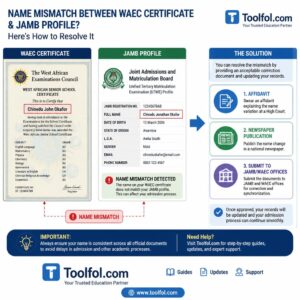
- Ensure your name is spelled consistently across all documents. Discrepancies between your WAEC certificate, JAMB registration, university admission letter, and bank account can cause problems.
- Keep your files organized — a simple folder on your phone or computer labelled “Scholarship Documents” with subfolders for each type of document can save you hours of scrambling.
How to Write a Strong Scholarship Application
For competitive scholarships, meeting the eligibility criteria is only the first step. The selection committee will choose from many eligible applicants, so the quality of your application matters.
Writing a Compelling Personal Statement or Essay
Most competitive scholarships ask you to write a personal statement, motivation letter, or essay. This is often the most important part of your application — it is where you distinguish yourself from other applicants with similar grades.
What a strong personal statement typically includes:
- A clear opening that engages the reader. Avoid generic openings like “I am writing to apply for your scholarship.” Instead, begin with a specific experience, observation, or motivation that connects to your academic goals.
- Your academic and career goals. What do you want to study or achieve? Why does this field matter to you? Be specific rather than vague.
- Why this scholarship. Show that you understand what the scholarship offers and why it aligns with your goals. This demonstrates that you did not send the same generic essay to fifty different scholarships.
- Evidence of your suitability. Do not just claim you are hardworking or passionate. Give specific examples — a project you completed, a challenge you overcame, a course that shaped your thinking, a community initiative you participated in.
- How you will use the education. What do you plan to do after your studies? How will it benefit your community, country, or field? Be realistic.
- Honest acknowledgment of challenges (if relevant). If the scholarship values overcoming adversity or financial need, you can describe genuine challenges without exaggeration or self-pity.
Common essay mistakes to avoid:
- Copying sample essays from the internet. Selection committees can recognize generic, recycled essays.
- Writing excessively long essays when a word limit is specified. Follow the instructions.
- Making unsupported claims. Saying “I am the most dedicated student in my department” without evidence is unconvincing.
- Focusing entirely on your financial problems without explaining your academic vision. Need-based scholarships still want to fund students with clear goals.
- Grammatical errors and poor formatting. Proofread carefully. Ask someone you trust to review your essay before submission.
Requesting Effective Recommendation Letters
When a scholarship requires recommendation letters:
- Choose recommenders who know you well enough to write specifically about your abilities, character, or potential. A professor who taught you a course and knows your work is usually better than a famous professor who cannot remember your name.
- Ask recommenders at least two to three weeks before the deadline. Lecturers are busy and may not respond to last-minute requests.
- Provide your recommender with relevant information — the scholarship name, what it is looking for, your CV, and any specific points you would like them to address.
- Follow up politely if the deadline is approaching and the letter has not been submitted.
- Thank your recommenders regardless of the outcome.
Completing Application Forms Carefully
- Read all instructions before filling in any form.
- Answer every required field.
- Double-check your personal details — name, date of birth, matriculation number, contact information.
- Save your work periodically on online forms.
- Take screenshots of your completed application and confirmation page as evidence.
- Submit before the deadline. “The portal crashed on the last day” is not an excuse that scholarship committees accept.
Managing Your Scholarship Search: A Practical System
If you are serious about finding financial support, treat your scholarship search as an ongoing project, not a one-time activity.
Step 1: Set Up a Tracking System
Use a notebook, spreadsheet, or phone note to record:
- The name of each scholarship or bursary.
- The provider.
- The eligibility requirements.
- The typical application period.
- The actual deadline (when announced).
- The required documents.
- Your application status (Not yet open / Applied / Shortlisted / Awaiting result / Successful / Unsuccessful).
Step 2: Allocate Regular Search Time
Set aside one or two hours per week — or per fortnight — specifically for checking your scholarship sources. This is more effective than spending an entire day searching once a year.
Step 3: Prepare Materials Continuously
Do not wait for a specific scholarship before preparing your documents. Keep your transcripts, recommendation letters, CV, and personal statement drafts updated so that you can respond quickly when an opportunity opens.
Step 4: Apply to Multiple Opportunities
Do not put all your hope in one scholarship. Apply to every legitimate opportunity you qualify for. Even if you receive a small bursary, it can help with immediate expenses while you pursue larger awards.
Step 5: Follow Up Appropriately
After applying, monitor the scholarship provider’s official channels for announcements about shortlisting, tests, interviews, or results. If a reasonable amount of time has passed and there is no update, a polite inquiry through official channels is acceptable. Do not send aggressive or repeated messages.
Step 6: Learn from Unsuccessful Applications
If you are not selected, reflect on what you could improve — your grades, your essay, your preparation, or the suitability of the opportunity. Many successful scholarship recipients applied and were rejected before eventually being selected.
State Government Bursaries: A Closer Look
Because state bursaries are the most widely available form of financial support for Nigerian students, they deserve additional attention.
How State Bursaries Typically Work
- The state government announces that bursary applications are open for a particular academic session.
- Eligible students — typically indigenes of the state enrolled in recognized tertiary institutions — apply through the state scholarship board, either online, physically, or both.
- Applicants submit required documents (admission letter, school ID, certificate of origin, etc.).
- The scholarship board processes applications and disburses payments.
- Payment is made directly to eligible students, often through bank transfer.
Common Challenges with State Bursaries
- Irregular availability: Some states have not offered bursaries consistently due to funding constraints or administrative changes.
- Low amounts: The amount may be ₦5,000–₦25,000 per session in some states, which helps but does not cover major expenses. Some states pay more.
- Payment delays: Students may apply in one year and receive payment much later.
- Documentation difficulties: Obtaining a certificate of origin or LGA identification letter can be bureaucratic and sometimes involves unofficial expenses.
- Limited information: Some state scholarship boards do not maintain updated websites, making it difficult to know when applications open.
How to Navigate State Bursaries
- Obtain your certificate of origin or LGA identification letter early — ideally before you even start searching for bursaries.
- Visit or contact your state scholarship board at the beginning of each academic session to ask about the bursary status.
- Keep copies of all submitted documents and any receipts or acknowledgment slips.
- Do not pay anyone who claims to “process” your bursary for a fee outside the official application process.
- Be patient but persistent. If your state’s bursary exists, ensure you apply whenever it opens.
A Detailed Example: Searching for Scholarships as a Specific Student
To make this practical, let us walk through the scholarship search process for a hypothetical student.
Student Profile
Name: Chukwuemeka (hypothetical)
State of origin: Enugu State
LGA: Nsukka
Institution: University of Nigeria, Nsukka (UNN)
Course: Mechanical Engineering
Level: 200 Level
CGPA: 3.75/5.0
Financial situation: Father is a retired teacher; mother is a subsistence farmer. Family struggles to pay tuition and living expenses.
Special circumstances: First child in the family to attend university.
Chukwuemeka’s Scholarship Search Plan
1. Enugu State Bursary
- Action: Visit or contact the Enugu State Scholarship Board to ask if the state bursary for the current session is open.
- Eligibility: Likely eligible as an Enugu State indigene enrolled in a recognized university.
- Documents needed: Admission letter, school ID, certificate of origin from Nsukka LGA, passport photographs, bank details.
- Expected amount: Modest (varies by state policy).
2. UNN Internal Scholarships
- Action: Visit UNN’s Student Affairs Division and the Faculty of Engineering office. Ask what scholarships are available for students in Chukwuemeka’s category. Check the UNN website.
- Eligibility: Depends on the specific scholarship. His strong CGPA (3.75) may make him competitive for merit-based awards.
3. NNPC/Total Scholarship
- Action: Monitor NNPC and TotalEnergies Nigeria official websites and social media channels for the annual scholarship announcement.
- Eligibility: Nigerian undergraduate studying engineering with a strong CGPA — he is likely a strong candidate if the programme is running and he meets all specific requirements.
- Preparation: Ensure transcripts are available and personal statement draft is ready.
4. Agbami Scholarship
- Action: Monitor the official Agbami scholarship portal for the annual announcement.
- Eligibility: Nigerian undergraduate, engineering student, strong CGPA — again, he may be a strong candidate.
5. Shell SPDC Scholarship
- Action: Check Shell Nigeria’s official website for the scholarship programme.
- Eligibility: May depend on whether the programme is currently running and whether it has specific regional requirements.
6. MTN Foundation Scholarship
- Action: Check MTN Foundation’s official website.
- Eligibility: Public university student with a strong CGPA — may be eligible if the programme is currently active.
7. Community and Family Network
- Action: Ask his family if the Nsukka community development association or any other local group provides educational support.
8. Faculty and Departmental Awards
- Action: Check with the Mechanical Engineering department for any prizes, book grants, or awards for high-performing students.
9. Long-term Planning for Postgraduate Scholarships
- Chukwuemeka is only in 200 level, but he can begin preparing for competitive postgraduate scholarships (like Commonwealth, Chevening, or DAAD) by maintaining his CGPA, building relevant experience, and eventually preparing for standardized tests.
This structured approach gives Chukwuemeka a realistic plan rather than a vague hope that “something will come along.”
Common Mistakes Nigerian Students Make When Searching for Scholarships
Mistake 1: Only Searching When Desperate
Many students begin looking for scholarships only when they cannot pay their school fees. By then, application deadlines may have passed. The best approach is to search proactively, well before you need the money.
Mistake 2: Ignoring Small Opportunities
A ₦20,000 bursary does not sound impressive, but it can cover a semester’s worth of textbooks, handouts, or transportation. Do not dismiss small awards while waiting for a “life-changing” scholarship that may never come.
Mistake 3: Applying for Everything Without Checking Eligibility
Submitting applications for scholarships you clearly do not qualify for wastes your time and sometimes annoys selection committees. Always check eligibility first.
Mistake 4: Submitting Weak Applications
A rushed essay, an incomplete form, or a missing document can disqualify an otherwise strong candidate. Invest time in quality.
Mistake 5: Relying on Social Media for Application Links
Fraudulent scholarship announcements circulate constantly on WhatsApp, Facebook, and Twitter. Always verify by going to the official provider’s website. If you cannot find the scholarship on the official website, it may not exist.
Mistake 6: Paying Money to Apply for a Scholarship
Legitimate scholarships do not ask you to pay processing fees, registration fees, or “commitment deposits” to third parties. If someone asks you to pay money into a personal account or use an unofficial payment channel to “secure” a scholarship, it is almost certainly a scam.
Mistake 7: Not Following Up
Some students apply and then forget about it. Monitor the provider’s announcements. If you are shortlisted for a test or interview, you need to know about it.
Mistake 8: Giving Up After One Rejection
Many scholarship recipients were rejected multiple times before succeeding. Each application teaches you something. Improve and apply again.
Mistake 9: Assuming Scholarships Are Only for Geniuses
While many competitive scholarships require strong academic results, some bursaries and awards prioritize financial need, community contribution, leadership, specific demographics, or other criteria. A student with a 3.0 CGPA may qualify for opportunities that a 4.5-CGPA student does not, depending on the criteria.
Mistake 10: Not Starting Early Enough for International Scholarships
International scholarships often require standardized test scores, recommendation letters, research proposals, and application essays that take months to prepare. Starting your preparation six to twelve months before the deadline is not too early.
How to Avoid Scholarship Scams
Scholarship fraud is a serious problem in Nigeria. Scammers exploit students’ financial desperation to steal money or personal information.
Red Flags That Suggest a Scholarship Is Fraudulent
- You are asked to pay a fee. Legitimate scholarship providers do not charge application fees through third parties or personal bank accounts.
- The scholarship was not announced on an official website. If the only source is a WhatsApp broadcast or an anonymous social media post, be very cautious.
- The provider cannot be identified. Vague names like “International Scholarship Foundation” or “Global Education Trust” with no verifiable address, website, or history are warning signs.
- The email domain is generic. An official scholarship from a major company or government body will not come from scholarshipboard2024@gmail.com.
- You are asked for sensitive information upfront. No legitimate scholarship requires your BVN, ATM PIN, online banking password, or similar details at the application stage.
- The opportunity guarantees selection. No real scholarship guarantees that everyone who applies will receive funding.
- The promise seems too good to be true. An “all-expenses-paid scholarship to Harvard for everyone who applies” circulated via WhatsApp is not real.
- Pressure to act immediately. Scammers create artificial urgency — “Apply in the next 24 hours or lose your slot.” Real scholarship programmes publish their deadlines and allow reasonable time for applications.
What to Do If You Suspect a Scam
- Do not pay any money.
- Do not click suspicious links or download attachments from unknown sources.
- Do not share your BVN, passwords, or banking details.
- Verify the scholarship independently by searching the official website of the supposed provider.
- If you cannot verify it, do not apply.
- Warn other students if you identify a fraudulent scheme.
Scholarships for Specific Groups of Nigerian Students
Some scholarships target specific demographics. If you belong to any of the following groups, look for opportunities designed for you.
Female Students
Several scholarships specifically support women’s education, particularly in science, technology, engineering, and mathematics (STEM) fields. Organizations like the African Women in Science and Engineering (AWSE), the Association of African Universities, and some international foundations offer awards for female students. Some corporate scholarships also have dedicated slots for women.
Students with Disabilities
The Nigerian government and some international organizations offer scholarships specifically for students with disabilities. Check with the National Commission for Persons with Disabilities, your state’s disability support services, and international organizations focused on disability and education.
Students from Disadvantaged Backgrounds
Some scholarships prioritize students from low-income families, orphans, students from conflict-affected areas, or first-generation university students. Need-based bursaries typically fall into this category.
Students in Specific Disciplines
Engineering, medicine, agriculture, education, and technology are among the fields most frequently targeted by corporate and international scholarships. If you study one of these disciplines, your pool of available opportunities may be larger than average.
Postgraduate Students
Many of the most valuable international scholarships — Commonwealth, Chevening, Fulbright, DAAD — are for postgraduate study. If you are a graduate or a final-year undergraduate, begin researching these well in advance.
What to Do After Receiving a Scholarship or Bursary
If your application is successful:
- Confirm the details. Understand exactly what the scholarship covers (tuition only, tuition and living expenses, a one-time payment, a recurring stipend, etc.) and for how long.
- Complete all required acceptance procedures. Some scholarships require you to sign an acceptance letter, provide additional documents, or attend an orientation.
- Meet any ongoing requirements. Many scholarships require you to maintain a minimum CGPA, remain enrolled full-time, or submit progress reports. Understand these conditions and comply with them. Failure to do so can result in the scholarship being withdrawn.
- Keep records. Save all correspondence, acceptance letters, payment confirmations, and receipts related to the scholarship.
- Express gratitude. A thank-you message to the provider or selection committee is appropriate and professional. Some scholarship programmes maintain relationships with recipients and may offer further support.
- Continue searching for additional support. Unless the scholarship’s terms prohibit it, you can often hold multiple awards simultaneously. A state bursary does not usually prevent you from also receiving a corporate scholarship, though you should check the terms of each.
Useful Resources for Nigerian Students Searching for Scholarships
The following are starting points for your search. Always verify details on the official website before applying.
| Resource | What It Covers | How to Access |
|---|---|---|
| Federal Ministry of Education website | BEA Scholarship and federal education policies | Search “Federal Ministry of Education Nigeria” |
| Your state scholarship board | State bursary and scholarship announcements | Visit the state capital office or search “[state name] scholarship board” |
| Your institution’s student affairs division | Institutional scholarships and financial aid | Visit the office on campus |
| NNPC official website | NNPC/Total and related petroleum industry scholarships | nnpcgroup.com (verify current URL) |
| Chevening Scholarship official website | UK government postgraduate scholarship | chevening.org |
| Commonwealth Scholarship Commission | UK postgraduate scholarship for Commonwealth citizens | cscuk.org.uk (verify current URL) |
| DAAD official website | German government scholarship programmes | daad.de |
| Fulbright official website | US government scholarship programmes | foreign.fulbrightonline.org (verify current URL) |
| Mastercard Foundation Scholars Program | Full undergraduate and postgraduate funding at partner universities | mastercardfdn.org (verify current URL) |
Reminder: Websites change, URLs are updated, and programmes evolve. Always verify the current URL and programme status through a search engine before relying on any listed link.
Frequently Asked Questions
Is there a single website where I can find all scholarships available to Nigerian students?
No. There is no single comprehensive and always-updated database of every scholarship available to Nigerian students. You need to search multiple sources — state government, federal government, your institution, corporate providers, and international agencies — systematically. Some aggregator websites exist, but they are not always complete, current, or verified. Always confirm details at the original source.
Can I apply for a scholarship if my CGPA is below 3.0?
It depends on the scholarship. Many merit-based corporate scholarships require a minimum CGPA of 3.0/5.0 or higher. However, need-based bursaries, state government bursaries, and some community awards may have lower or no CGPA requirements. Focus on opportunities that match your actual academic profile rather than only targeting the most competitive awards.
Do I have to pay to apply for a scholarship?
Legitimate scholarships do not charge application fees to a third party. However, you may incur costs such as obtaining official transcripts from your institution, taking standardized tests (IELTS, GRE, etc.) for international scholarships, or traveling for an interview. If someone asks you to pay into a personal bank account or use an unofficial payment channel for a “scholarship processing fee,” it is likely a scam.
Can I receive more than one scholarship at the same time?
In many cases, yes — unless the terms of a specific scholarship prohibit holding simultaneous awards. A state bursary generally does not prevent you from also receiving a corporate scholarship. However, some international scholarships require you to declare other funding and may reduce their award accordingly. Always read the terms and conditions.
I missed the deadline for a scholarship I wanted. What should I do?
If the deadline has passed, you generally cannot apply for that cycle. Note the scholarship in your tracking system and prepare to apply in the next cycle, if one is available. Use the waiting time to improve your profile — raise your CGPA, gain relevant experience, prepare your documents, and draft a stronger application. Some scholarships are offered annually; others are not.
Are state bursaries worth applying for if the amount is small?
Yes. Even a modest amount can help with practical expenses like textbooks, handouts, transportation, or data. The application process for state bursaries is usually straightforward, and the competition is typically less intense than for corporate or international scholarships. It is one component of an overall financial strategy, not a replacement for other funding sources.
How do I know if a scholarship I found on social media is real?
Go to the official website of the organization supposedly offering the scholarship and look for the announcement there. If you cannot find it on the official website, contact the organization directly through their verified channels. Do not trust WhatsApp messages, anonymous social media posts, or third-party websites as your sole source of information.
When should I start preparing for international postgraduate scholarships?
At least 12 to 18 months before you want to begin studying abroad. This gives you time to research programmes, prepare for and take standardized tests, gather documents, write application essays, secure recommendation letters, and meet deadlines. Some students begin preparing in their final year of undergraduate study or during NYSC.
Conclusion
Finding scholarships and bursaries as a Nigerian student requires initiative, organization, patience, and persistence. Opportunities exist at the state, federal, institutional, corporate, and international levels, but they will not come to you automatically. You have to search for them, verify them, confirm your eligibility, prepare strong applications, and submit them on time.
Start by building your personal eligibility profile so you know what types of opportunities match your background. Search systematically using official sources — your state scholarship board, your institution’s student affairs office, official corporate and foundation websites, and verified international scholarship portals. Do not rely on social media or unverified third-party websites for application links.
Prepare your documents in advance so that you can respond quickly when applications open. Invest time in writing genuine, specific, and well-crafted personal statements instead of copying generic templates. Track your applications and learn from unsuccessful attempts.
Above all, protect yourself from scams. Never pay money to a third party for a scholarship application, and always verify an opportunity at its official source before sharing personal information.
No single article can guarantee you funding. But a systematic, informed, and persistent approach gives you the best realistic chance of finding financial support for your education.
Your next step: create your personal eligibility profile today, identify three to five realistic opportunities using the sources described above, and begin preparing your documents. The students who receive scholarships are almost always the ones who started looking early, prepared carefully, and did not give up after the first attempt.